Are Nanobebe Bottles Good for Breastfed Babies? Only With the Right Routine
Posted on 2026-08-13 by Jane Smith
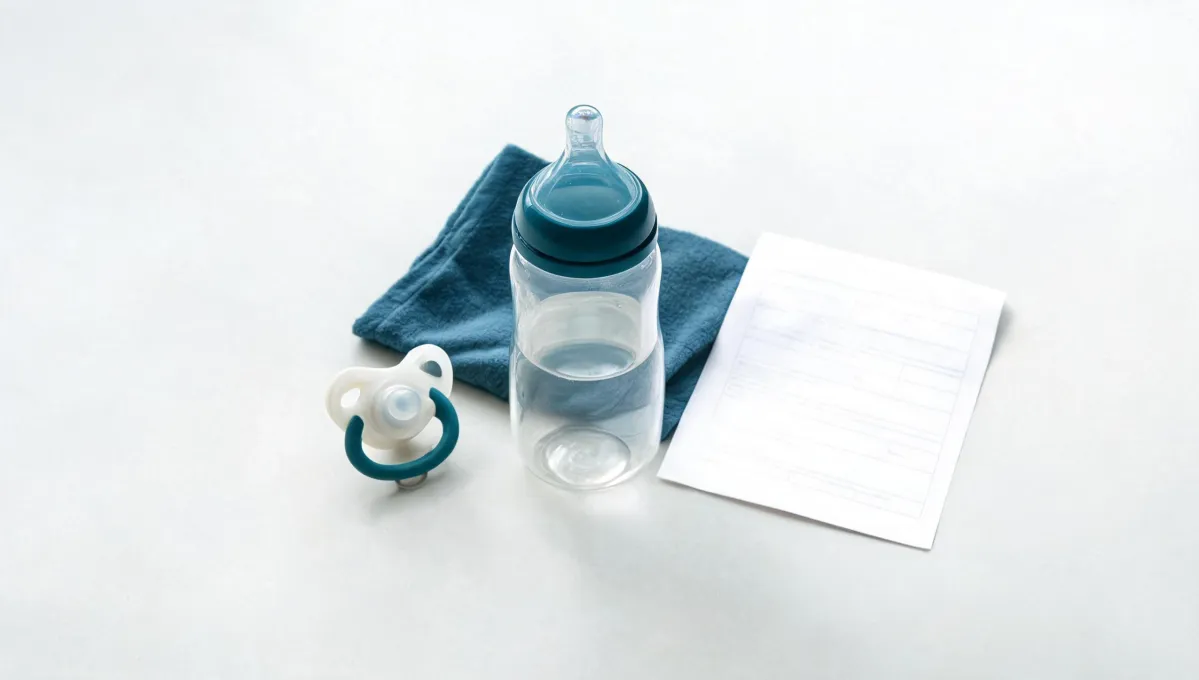
Nanobebe bottles are genuinely good for many breastfed babies — but the word 'good' only holds up when you pair the bottle with the right feeding style and a realistic cleaning routine. The company's own site leads with 'award-winning anti-colic baby bottles' and a feeding ecosystem built around silicone, breast-milk-specific shapes, and accessories designed to support nursing mothers. That sounds like exactly what a parent returning to work wants: a bottle that mimics the breast, reduces gas, and keeps your pumped milk as close to fresh as possible. The catch is that no bottle, including nanobebe, can promise to work for every baby. Your baby's latch, nipple-flow preference, and even your sterilizing habits will decide whether this $16.99–$18.99 bottle earns its place in your rotation. So before you buy, you need a clearer decision rule than 'award-winning.'
Are Nanobebe Bottles Actually Good for Breastfed Babies? Let's Decide
Nanobebe bottles are genuinely good for many breastfed babies — but the word 'good' only holds up when you pair the bottle with the right feeding style and a realistic cleaning routine. The company's own site leads with 'award-winning anti-colic baby bottles' and a feeding ecosystem built around silicone, breast-milk-specific shapes, and accessories designed to support nursing mothers. That sounds like exactly what a parent returning to work wants: a bottle that mimics the breast, reduces gas, and keeps your pumped milk as close to fresh as possible. The catch is that no bottle, including nanobebe, can promise to work for every baby. Your baby's latch, nipple-flow preference, and even your sterilizing habits will decide whether this $16.99–$18.99 bottle earns its place in your rotation. So before you buy, you need a clearer decision rule than 'award-winning.'
Here is the situation you are probably sitting in. You have a breastfed baby who eats well at the breast, but you are going back to work, or your partner wants to take a middle-of-the-night feed, and you need a bottle that will not undo the nursing relationship you have built. The worry is real: switch to the wrong nipple, and your baby might start refusing the breast; choose a bottle that traps air, and you trade latch problems for gas and spit-up. Nanobebe's silicone, breast-shaped design is meant to sidestep both traps, but the evidence you actually need is not just about shape — it is about how the bottle is cleaned, how fast the milk flows, and whether your baby accepts a silicone nipple at all. That is why the question 'are nanobebe bottles good?' only makes sense inside a bigger question: good for whom, and under what conditions?
What a Breastfed Baby Actually Needs From a Bottle
To judge any bottle for a breastfed baby, you need four criteria, not just one. Anti-colic performance comes first because trapped air is what turns a feeding into a crying session. Second is the feel: the nipple should be wide, soft, and shaped enough to encourage a deep latch similar to the breast, not a shallow straw sip. Third is material safety and heat tolerance, because you will be warming milk and sterilizing the bottle constantly. And fourth — the one that most bottle reviews skip — is cleanability. Every valve, seam, and narrow neck becomes a place where milk residue hides, and for a newborn that is not a texture problem, it is a health risk. A bottle that fails on this last point fails the whole test, no matter how clever its shape is.
Here is where the cleaning criterion stops being an afterthought and becomes the deciding factor. According to guidance cited by Exclusive Pumping, the CDC recommends sanitizing feeding items at least once daily when your baby is younger than 3 months, born prematurely, or has a weakened immune system; older, healthy babies can get by with careful washing after each use. That CDC-backed rule changes how you should evaluate nanobebe or any bottle: the anti-colic valves and silicone folds that make the bottle gentle on your baby's tummy also make it more labor-intensive to sanitize properly. If you cannot commit to daily sterilization during those first months, then even the best-designed bottle will not protect your baby from the germs that collect in milk residue. In other words, the bottle's quality only matters as much as your willingness to maintain it.
How Nanobebe Lines Up on the Evidence
On paper, nanobebe lines up impressively on the evidence. The official shop page shows a full ecosystem: Flexy Silicone Baby Bottles in 5oz and 9oz sizes, a Breastmilk Baby Bottle, silicone anti-colic nipples, pacifiers, cleaning accessories, and even an E-Brush electric bottle brush. Prices run from about $16.99 for the 5oz Flexy bottle to $18.99 for the 9oz version, and the brand frequently bundles them into feeding sets like the Ultimate Newborn Baby Bottle Feeding Set or the Breastmilk Bottle Starter Set. It also sells a microwave steam sterilizer and a 'Breastmilk Bottle Warming Bowl,' which tells you the brand expects you to handle heat and sanitation as part of the system. The silicone anti-colic nipples are a separate purchase at around $5.99 for a pack, and the 4m+ Active Flexy Pacifier extends the same material philosophy into soothing. That is not a single bottle — it is a designed feeding journey, and the pricing stays within what most parents would call 'testable' rather than 'luxury.'
The cleaning praxis for nanobebe mirrors the CDC guidance you just read, but with a brand-specific twist. Because the Flexy bottles are made of silicone and include separate nipples and anti-colic vents, you will be disassembling more parts than you would with a simple one-piece bottle. That means the daily sanitizing routine for a baby under 3 months is not just a suggestion — it is the difference between a bottle that works and a bottle that becomes a breeding ground. The good news is that nanobebe sells the tools to make this easier: a Microwave Steam Sterilizer sells for around $39.99 (seen in the product line), and the E-Brush electric brush addresses the narrow bottoms that are hard to reach by hand. If you already own a sterilizer that fits their parts, you can skip the accessory; the key is that the routine must exist. A parent who tells you 'nanobebe caused gas' is often really describing a bottle that was not sanitized daily, or a nipple flow that was too fast for the baby's age.
Nanobebe's own positioning explains why the brand keeps landing on breastfed-baby lists. On its About page, the company says it is 'committed to being your first choice in modern baby care' and that every product is designed to 'support the bond between you and your little one.' It frames itself around 'research-driven solutions' and a mission to make parenting easier — not around a claim that every baby will accept every bottle. That is a meaningful distinction: the brand's promise is about supporting the breastfeeding journey, preserving nutrients, and simplifying your routine, not about eliminating colic with magic. When you read the official line next to the CDC’s sterilizing advice, the picture becomes clear: nanobebe provides the tools, but you provide the care routine. That is why the real test is not silicone versus plastic — it is whether your daily habits can keep up with the product’s design.
The Compare-and-Decide: Nanobebe vs. Your Real Options
To decide where nanobebe fits, compare it against your real options: a standard narrow-neck bottle, a different anti-colic brand, exclusive pumping, or direct nursing. The dimensions that matter are nipple flow, material weight, cleaning load, and portability. A standard bottle is cheaper and easier to clean, but it often delivers milk faster than a baby can manage, which can lead to gas and overfeeding. A different anti-colic brand might match nanobebe on venting, but it may not offer the same breast-shaped silicone feel that helps with latch. Exclusive pumping is the most controlled option — you control the flow, the amount, and the pace — but it is also the most time-consuming, because you clean pump parts and bottles constantly. Direct nursing remains the gold standard, but it is not available to every parent at every feed. Nanobebe sits in the middle: it aims to preserve the breast-like feel while giving you a portable, pump-compatible bottle, but it asks for a higher cleaning commitment than a simple plastic bottle.
Nanobebe is not the right answer in every scenario. If your baby has a strong preference for a fast-flow, latex, or narrow nipple, the silicone wide-neck shape may cause more frustration than relief. If you are exclusively pumping and already own a pump that works with standard bottles, adding nanobebe means buying adapters and learning a second cleaning routine. And if you cannot commit to daily sanitizing for a baby under 3 months — because you are traveling, have limited hot water, or simply find the five-part disassembly exhausting — then a simpler bottle with fewer crevices might be the better risk trade-off. The limiting factor is not the brand’s quality; it is your logistics. Nanobebe is a good bottle for a parent who has the bandwidth to maintain it and a baby who responds to its flow. For everyone else, it is a 'maybe' that deserves a trial period before you invest in the full ecosystem.
Verdict: Good for Many Breastfed Babies, With One Big Caveat
Here is the verdict you came for: nanobebe bottles are a strong choice for many breastfed babies, especially those with colic tendencies or latch issues, but the final call is conditional. If your baby accepts the silicone nipple at the right flow, and you are willing to sterilize daily for the first three months, the evidence supports giving nanobebe a real trial. The brand’s award-winning anti-colic designs, silicone construction, and feeding-ecosystem accessories all address the criteria that matter most for a breastfed baby. But the phrase you should remember is not 'nanobebe is good' — it is 'nanobebe is good when used correctly.' The bottle is a tool, not a guarantee; the same product that soothes one baby can frustrate another if the flow is wrong or the cleaning routine slips. Keep that caveat in mind as you make your choice.
Use this decision rule before you buy: First, confirm your baby is not under 3 months or, if they are, that you can realistically sanitize feeding items once a day — if not, choose a simpler bottle. Second, buy a single 5oz Flexy bottle rather than a full set, and test it for three to five days while watching for gas, spit-up, and latch refusal. Third, choose the slowest-flow nipple first, because a breastfed baby is used to working for the milk; if your baby gulps, step up the flow after a week. Fourth, if the test period goes well, then invest in accessories like a second bottle and a sterilizer; if not, you have spent only around $17 and can switch without guilt. That rule turns 'are nanobebe bottles good?' into a question you answer with your own baby’s behavior and your own calendar — which is the only way to answer it honestly.
Use this decision rule before you buy: First, confirm your baby is not under 3 months or, if they are, that you can realistically sanitize feeding items once a day — if not, choose a simpler bottle. Second, buy a single 5oz Flexy bottle rather than a full set, and test it for three to five days while watching for gas, spit-up, and latch refusal. Third, choose the slowest-flow nipple first, because a breastfed baby is used to working for the milk; if your baby gulps, step up the flow after a week. Fourth, if the test period goes well, then invest in accessories like a second bottle and a sterilizer; if not, you have spent only around $17 and can switch without guilt. That rule turns 'are nanobebe bottles good?' into a question you answer with your own baby’s behavior and your own calendar — which is the only way to answer it honestly.

Jane Smith
I’m Jane Smith, a senior content writer with over 15 years of experience in the packaging and printing industry. I specialize in writing about the latest trends, technologies, and best practices in packaging design, sustainability, and printing techniques. My goal is to help businesses understand complex printing processes and design solutions that enhance both product packaging and brand visibility.