Bright Starts Rattle and Teethe Wrist Pals: A Parent's Honest Verdict
Posted on 2026-09-03 by Jane Smith
-
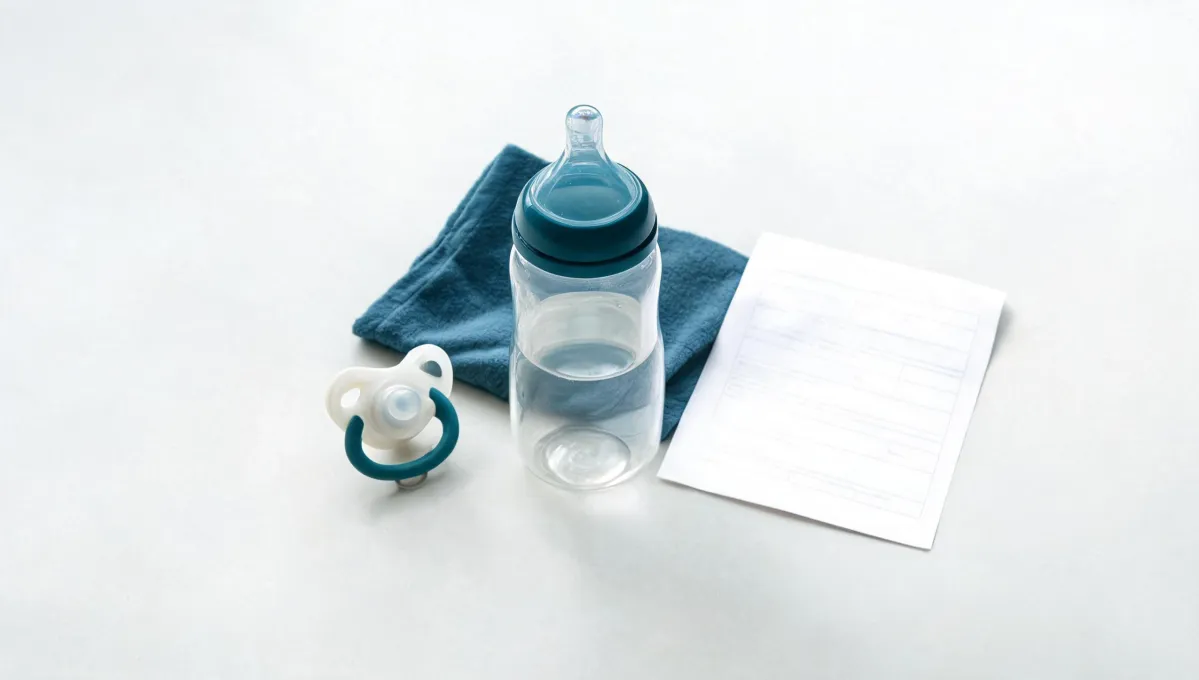
Keep a wrist pal on a baby who is starting to grasp
-
Follow how the rattle, teether, and wrist band work together
-
Match the wrist pal to babies who actually mouth and grasp
-
Match the choice to the moment: a side-by-side decision table
-
Care for the wrist pal and ask Bright Starts when in doubt
-
Use the rule: choose by how often the toy stays on the baby
Buy the Bright Starts Rattle and Teethe Baby Wrist Pals Toy for a baby who is starting to grasp, and feel free to skip it once the baby holds a teether through a whole session. The reason is in the design: the wrist band keeps the toy on the child, so the rattle and teether stay available for play instead of landing on the floor between every wave. For most babies in the short mouthing-and-grasping window, fewer dropped toys means fewer interruptions, and fewer interruptions is exactly what this toy sells.
Keep a wrist pal on a baby who is starting to grasp
Keep this wrist pal on a baby who is beginning to grasp, and hold off while the baby still shows no interest in reaching for toys. The toy makes one narrow promise: a band anchors it to the wrist, so drops stop ending play. In the intense phase when a baby mouths everything but cannot control where a held object goes, a standard toy hits the floor again and again, and every drop restarts the game. With the pal strapped on, the same wave keeps the rattle and teether near the mouth, so the baby can move from shaking to chewing without waiting for you to fetch anything. This is not a promise of longer attention or faster development; it is a promise about where the toy lands. When a toy stays on the baby, the baby keeps playing, and that is the whole value.
You might wonder whether a toy strapped to a tiny wrist is clever or just another gadget, and the fair reply is that it solves a failure parents often misunderstand. A teether does not need to be only soft and colorful; it needs to be where the mouth is. When a rattle skitters under the couch or a teether rolls out of reach, the problem is not the toy's quality but its location, and no amount of nice material fixes a toy that is on the floor. The wrist band removes that location problem, which is why this toy earns its place for a baby who already chases toys with the eyes and mouth but cannot yet keep them in hand.
Call the wrist pal a rattle, a teether, and a strap in one object. Bright Starts describes its purpose in terms of preserving joyful moments from first babbles to first birthdays, and that statement moves the decision from 'does it soothe?' to 'does it make play less interrupted?' Joy, by the brand's own definition, is the absence of constant interruptions, so the product's context is inseparable from its band. The context is not proof about materials or fit; it is evidence of intent. It tells you the company designed the toy as a friction remover, not as a medical tool, which is exactly how you should judge it: does it keep the toy reachable while your baby plays, and does your baby tolerate wearing it at all? If either answer is no, the brand's warm framing does not save the purchase.
Follow how the rattle, teether, and wrist band work together
The rattle, the teether, and the band handle three separate jobs that usually fight each other. The rattle rewards arm movement with sound, teaching the baby that a gesture produces a result. The teether then gives the mouth a target when the hand drifts upward, which is precisely the moment a plain toy fails, because a baby who must choose between shaking and chewing usually drops both options. The band settles the conflict by keeping the toy attached while the hand opens and closes. Bright Starts' catalog spans play gyms, walkers and activity centers, baby toys, and bouncers, so this combination idea lives inside a company with years of stage-based play experience. That breadth is context, not certification: it suggests the three-in-one design was intentional, but it cannot tell you whether a given band size or fastener suits your baby. Only a short wrist test can do that.
The combination does its best work in the short window when mouthing and grasping overlap and hand control is still clumsy. You will know it by a simple pattern: the baby grabs a toy, brings it toward the mouth, then relaxes the fingers at the last moment, and the toy falls straight down. In that phase the hand is a delivery service with an unreliable grip. A wrist-mounted toy removes the weak link because the band does the holding and the baby only needs to move the arm. The window closes when the baby can carry a teether to the mouth and keep it there without dropping; after that, the wrist pal changes from a daily helper into an occasional convenience.
What if your baby likes the sound but not the chewing, or the chewing but not the shaking? Then buy for the stronger behavior instead. A baby who only wants noise will be happy with a plain rattle, and a baby who only wants to gnaw will be happier with a dedicated teether. The wrist pal is worth its shelf space when both behaviors live in the same child and the floor keeps interrupting the play. Test it in one sitting: strap it on and watch whether the baby mouths the attached part, shakes the toy, or simply ignores the whole thing. The toy earns its place only when the baby actually uses both sides of it.
Match the wrist pal to babies who actually mouth and grasp
Imagine an ordinary afternoon: a blanket on the floor, tummy time, and a baby who should be exploring but keeps fussing because the nearest toy has rolled away. In this scene the wrist pal earns its name. Strap it on and the baby can bite, wave, and wiggle without losing the toy every thirty seconds. When the baby drops it, the band keeps it close, often dangling at exactly the height the hand needs. The toy is at its best on mats, blankets, and rugs, wherever the floor steals toys and the parent is the only retrieval system. The babies who fit best are frequent mouthers and early graspers, children who want the toy and lose it at the same time, not children who merely look at it.
The clear exceptions are just as useful. Skip the wrist pal when a baby has not started reaching or swiping for toys, because the toy will sit unused while you wait for a stage that has not arrived. Skip it when a baby already holds a teether through a long session, because the wrist band is built to compensate for a grip problem your child no longer has. And if the real need lives in the stroller or car seat, a wrist toy is the wrong shape: those spaces need a toy that clips to the harness or fits a small hand, not a band that wraps around an arm already pressed against a buckle. Applying those exceptions keeps the purchase honest.
Match the choice to the moment: a side-by-side decision table
So which one goes in the cart: the rattle everyone recognizes, the teether that promises calm, or the wrist pal that combines them? The honest answer is that none of the three is always right; the right choice depends on where the toy will land, not on which package is cuter. A loud rattle that falls every few seconds is not a better toy because it is loud. A gentle teether that requires a firm grip is no comfort when the baby lets go and cannot find it. The wrist pal avoids both failures only in the right environment. Ask what happens after the first drop, because that single moment will tell you which format your baby actually needs. Most buying mistakes happen when parents compare sounds and colors instead of drop behavior, and that habit is exactly what this comparison tries to break.
Compare the three by the same yardstick: how long the toy stays usable. A standard rattle wins when a baby can shake on purpose and enjoys the sound enough to keep an arm moving; it fails when the hand relaxes, and the session becomes a game of fetch. A plain teether wins when a baby's only goal is to gnaw and the hand keeps the toy pressed to the gums; it fails the moment the baby releases it to reach for something else. A wrist pal wins when both behaviors appear in one sitting and play happens on a floor mat; the baby shakes, bites, drops, and finds the toy again without help. If you track an afternoon, the differences show up as interruptions: the handheld options may need retrieving many times, while the anchored toy turns most drops into a reach-and-regrab. For a baby squarely inside the mouthing-and-grasping window, the wrist pal is the stronger single buy; for a baby who already manages a handheld teether, it is the one you can skip.
There is no permanent winner among these toy types, and that is the point. A rattle stays charming, and a teether stays dependable, but neither addresses the complaint that brought you here: the toy keeps ending up somewhere else. The wrist pal exists to answer exactly that complaint, and only that complaint. It is not a teething cure, and it is not a developmental booster; it is a retention tool with a defined moment of usefulness. Keep that narrow definition in mind, because the final rule of this article depends on it, and it will make your decision in the aisle far easier when you reach it.
Care for the wrist pal and ask Bright Starts when in doubt
Treat the wrist pal like any toy that spends its day near a mouth: keep it clean, dry, and in good repair. Wipe the teether and the band after use, or follow the care instructions that come with it, then let everything air-dry before the next session. Check the fit each time you strap it on; the band should be snug enough to stay put without leaving a mark on the skin. Also inspect the toy for loose seams, cracks, or worn parts, because a damaged teether is not worth the risk once it starts to break down. Store it away from direct sun and heat, which age soft parts faster than normal play does. These steps keep the toy ready for the very window of use that justifies buying it.
When your own checks are not enough, the brand expects you to ask. Bright Starts shares a parenting community and a customer-care line in its official information, and it lists that support as part of living with the product: parents who have questions about fit, replacement parts, or warranty can reach the line Monday through Friday, 9AM to 5PM EST. The value of support is not that it makes the toy better; it resolves doubt so you can decide whether the toy still has a job in your home. Treat the phone number as a practical backstop, not as a feature. If the wrist pal fits badly, irritates the skin, or breaks early, that call answers your next question faster than guessing.
Use the rule: choose by how often the toy stays on the baby
The verdict from the opening still holds: for most babies in the mouthing-and-grasping window, the Bright Starts Rattle and Teethe Baby Wrist Pals Toy is a worthwhile addition, and the reason is the band that keeps the toy on the child. The toy does not promise to end teething pain, to teach skills ahead of schedule, or to entertain for hours; those are not its jobs. Its single job is retention, and retention matters because a teether that spends the afternoon under the sofa is a teether the baby cannot use. Every time a dropped toy interrupts play, the parent becomes a service provider instead of a companion. When the toy stays on the baby, the baby gets more play out of the same object, and that is the real return on this purchase.
Use this rule in the store without overthinking. Buy the wrist pal when your baby mouths everything, drops or loses most toys within seconds, and plays mainly on a mat or blanket where things roll away. Skip it when the baby already holds a teether through a full session, has not yet started reaching, or needs a toy for the stroller and car seat, where a wrist band is the wrong answer. If you are still torn, ask the question this article keeps coming back to: does the toy stay on the baby or does it end up on the floor? If it stays on the baby, any of the options can work; if it keeps ending up on the floor, the wrist pal is the one designed for that exact problem.
Here is the decision in one line: the wrist pal is worth buying when the toy keeps ending up on the floor, and worth skipping when your baby already keeps it in hand. Let the landing spot decide, not the label, and you will not need to read another review.

Jane Smith
I’m Jane Smith, a senior content writer with over 15 years of experience in the packaging and printing industry. I specialize in writing about the latest trends, technologies, and best practices in packaging design, sustainability, and printing techniques. My goal is to help businesses understand complex printing processes and design solutions that enhance both product packaging and brand visibility.