How the Flexy Newborn Pacifier Survives the 2 A.M. Test
Posted on 2026-08-26 by Jane Smith
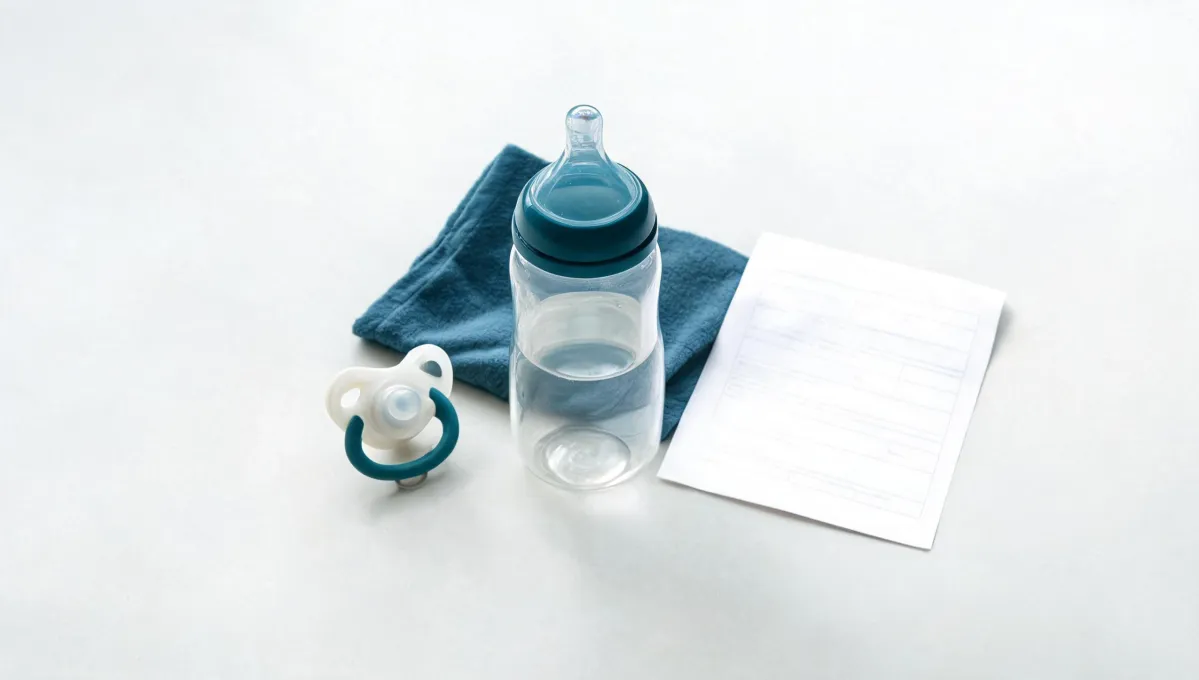
It's 2 a.m., and the crying has started again. You have already tried the pacifier from the hospital bag, the one that seemed fine in the store, but it keeps slipping out of your newborn's mouth. Your baby wriggles, the pacifier falls onto the blanket, and the crying restarts. You reach for your phone and search 'newborn pacifier reviews,' because at this hour the difference between a cheap generic pacifier and a slightly pricier option stops feeling abstract. The question is no longer which one is cheapest; it's which one might actually stay put long enough for everyone to get back to sleep. You want a pacifier that fits a newborn's small mouth, stays in during the witching hours, and doesn't make you worry about what your baby is chewing on. That search leads you to a few premium brands and a handful of budget options, and you start wondering whether the prices reflect real differences in material and design.
The 2 A.M. Pacifier Hunt
At that moment, the practical question is not whether your baby needs a pacifier but which one will do the job without becoming a second battle. You can grab a pack of generic silicone pacifiers for a couple of dollars, and they look fine in the packaging. Once you open the box, though, you notice details: the nipple is stiffer, the shield is heavier, and the material feels less flexible against your cheek. Some pacifiers are labeled 'newborn' but sit awkwardly in a tiny mouth, and a baby who spits it out grows more frustrated, not less. The real problem isn't the crying itself; it's that a pacifier which slips out again and again trains everyone to expect failure. You start reading reviews and comparing materials, and you realize that the word 'silicone' covers a lot of ground. Some silicones are soft and food-grade, others are harder and more likely to lose shape. This is the moment when a tired parent begins to ask: what am I actually paying for when a pacifier costs more than a dollar?
The first concrete hint comes from the official Nanobébé homepage. The page lists 'Flexy Silicone Pacifiers' with a sale price 'From $4.49,' and it also highlights that Nanobébé is an award-winning baby care brand with free shipping on orders over $50. That price point is not dramatically higher than a generic pacifier, but it sits inside a larger system: the same brand sells Flexy bottles in two sizes, a wearable breast pump, and a smart baby monitor. For a parent who is already considering those products, the pacifier stops being a standalone purchase. The advertised price is the entry point, not the whole story. You begin to see that the real comparison isn't just pacifier versus pacifier; it's whether you want to buy a single item or invest in a coordinated feeding and soothing kit that will likely be part of your baby's daily routine.
Why 'They're All the Same' Costs You Sleep
The most common assumption among new parents is that all silicone pacifiers are essentially the same, so price is the only factor that matters. You pick up a $2 pacifier and a $6 pacifier, and they both look like a nipple with a shield. If you have not thought about how silicone is graded, how the shape matches a newborn's palate, or how the pacifier attaches to other gear, the cheaper option seems like the obvious win. The logic feels airtight: it's the same material, the same shape, and the baby will probably reject both anyway. That belief survives until the pacifier falls out for the tenth time in one night. Then the real cost starts to climb: extra loads of laundry, more middle-of-the-night trips to the nursery, and a newborn who is too worked up to settle back down. The cheap pacifier saves you two dollars now, but it can cost you hours of sleep over the first few weeks.
Nanobébé's own mission statement points to why that assumption is wrong. On their About page, the company says it creates 'thoughtful, research-driven solutions' and that every product in their ecosystem is 'designed to simplify your daily routine with innovative features.' That is not a coincidence or a marketing slogan; it is the difference between a commodity and a designed answer to a specific parenting problem. When a brand invests in research, the material, the shape, and the way pieces connect are all treated as variables, not fixed defaults. A pacifier that is designed as part of a feeding system has to work with the bottle nipple, the sterilization routine, and the way the baby's mouth develops. That changes how the silicone is chosen, how the shield is weighted, and how the pacifier behaves when a baby chews on it. The research-driven approach is exactly what separates a tool from a random piece of plastic.
The product catalog reinforces this point. The Nanobébé store page for all products lists the Flexy Silicone Pacifiers at 'starting at $4.49' and also shows the Flexy Silicone Baby Bottles in 5oz and 9oz versions, an 'Active Flexy Pacifier (4m+)' for older babies, and accessories like breast pump parts and replacement nipples starting at $5.49. When a pacifier is designed alongside bottles in the same line, you can see deliberate connections: the shield size, the nipple softness, and the clip-on compatibility are all part of a system that grows with your baby. The catalog also shows that the pacifier is not a standalone oddity; it is one of several items under the 'Pacifiers' category, next to nursing pads and bottle accessories. For a parent comparing options, this means the Flexy pacifier is not competing on price alone—it is competing on interoperability with the rest of the baby gear you may already own or plan to buy.
What the Flexy Newborn Pacifier Actually Is
Looking at the product itself, the Flexy Newborn Pacifier is defined by what Nanobébé calls '100% Silicone Pacifiers' and a design that has earned the brand an award-winning reputation. On the official homepage, the pacifier appears right next to the Flexy Silicone Baby Bottle 9oz, and both are promoted as part of the same flexible silicone family. The idea of 'pure silicone' matters because some pacifiers mix in other materials or use a silicone that is only partly food-grade. A pacifier that goes into a newborn's mouth needs to be smooth, free of seams, and able to be sterilized repeatedly without breaking down. Nanobébé's positioning suggests that the material is the foundation of the design, not an afterthought. The award-winning badge, repeated across the site, is a signal that the brand intends to be held to a higher standard for baby products, which is exactly the kind of reassurance a tired parent needs at 2 a.m.
The feature set becomes clearer when you look at the store navigation and the product list. The shop categorizes pacifiers under 'All-Silicone Pacifiers' and pairs them with 'Award-Winning Anti-Colic Baby Bottles,' suggesting that the pacifier is meant to work in tandem with the bottle system. One official page emphasizes a 'Black Friday Week 2024 - 20% OFF Silicone Bottles + Sets' promotion, which shows that the brand regularly bundles feeding products. The catalog also lists the 'Active Flexy Pacifier (4m+)' for older babies, meaning the newborn version is the first step in a two-stage approach. The pacifier's shape, with a soft, flexible nipple and a lightweight shield, is designed to be gentle on a newborn's developing mouth. Because the entire Flexy line uses the same silicone material, the pacifier should feel consistent with the bottle nipple, so a baby who is used to feeding from a Flexy bottle is more likely to accept the pacifier without confusion.
The ecosystem note is simple: the Flexy pacifier is one piece of a larger puzzle. The official all-products page shows the Flexy Baby Bottles in 5- and 9-ounce sizes, a complete feeding set, and a range of accessories like quick-click handles and nursing pads. When a pacifier is sold alongside these items, it becomes more than a standalone calming tool—it is part of a coherent system built around feeding and soothing. For parents who plan to use Nanobébé bottles, the pacifier pairs naturally: same material, same softness, same design language. Even the store's 'Pacifiers' category includes only Flexy options, which means the brand is making a deliberate bet that parents who start with the pacifier will stay in the family. If you are already buying a bottle starter set, adding the pacifier at $4.49 is a low-cost way to complete the kit.
Flexy vs. a Basic Pacifier: The Buying Decision
To make the buying decision, you need a framework that goes beyond sticker price. Start with the price itself: the Flexy pacifier starts at $4.49 on the official site, while a generic pacifier can cost $1 to $3. The gap is small, but it buys you pure silicone, a shape designed for newborns, and integration with a broader product line. Next, consider durability and comfort. A harder pacifier is more likely to pop out or annoy the baby; a softer, more flexible material conforms to the mouth and stays in longer. Finally, think about the future. If you anticipate buying bottles, the Flexy pacifier's compatibility with both bottle sizes and the 4m+ active version means you are not buying a one-time item but investing in a system. If you are brand-agnostic and never plan to buy another Nanobébé product, the pacifier still competes on material and design, but loses some of its ecosystem advantage.
Consider the scenario of a parent who already owns a Flexy bottle or is planning to build a feeding set. The official store's category mechanism shows that Nanobébé groups products under categories like 'Bottles', 'Pacifiers', and 'Feeding', and the Flexy pacifier appears in the same family as the Flexy bottles. That parent will find the pacifier a natural, cost-effective addition: the material matches the bottle nipple, the sterilization routine is the same, and the baby already recognizes the shape. Now imagine a parent who is completely new to the brand and only wants a single pacifier. For them, the Flexy competes on material and design: 'pure silicone' and an award-winning design justify the slight premium over a generic option. The deciding factor is not the four dollars itself, but whether you value a coordinated system and are willing to give the pacifier a real try.
The brand's commitment to being 'your first choice in modern baby care' and a research-driven design philosophy (from their About page) gives the verdict a foundation. The Flexy pacifier is not a miracle cure for every crying newborn, but it deserves a place on your list because it addresses the two things that keep failing you: material quality and fit. The all-silicone body is soft enough to be accepted by a newborn, and the design is deliberately paired with the rest of the Flexy line. The $4.49 entry price is low enough to trial without guilt. The real question is whether your baby accepts the shape—that is individual and cannot be predicted by any review. If the pacifier works, you have solved the immediate problem with a high-quality tool; if it doesn't, you are out a few dollars, not a fortune. The preview of the verdict is: buy it if you want a premium silicone pacifier and you are open to building a Nanobébé system; skip it if you are strictly price-driven and never plan to use other products from the brand.
The Bottom Line for Newborn Parents
Here is the bottom line for newborn parents: the Nanobébé Flexy Silicone Pacifier deserves serious consideration—especially if you value premium silicone, plan to build a coordinated feeding system, and your baby accepts its shape. It is not the cheapest pacifier on the shelf, but the price gap is small enough to be measured in a few dollars, and what you get is a soft, high-quality silicone pacifier from a brand that puts research behind its designs. The material feels different from a generic silicone disc, and the shape is clearly aimed at staying in a tiny mouth. If you already own a Flexy bottle or are planning to buy one, this pacifier becomes the missing piece of a system that works together. For a little more money, you are buying consistency, comfort, and a product that has been designed with intention, not guesswork.
Of course, this verdict comes with boundaries. The Flexy pacifier is not the right choice for every parent. If you are strictly price-driven and never plan to buy another Nanobébé product, a basic silicone pacifier from a drugstore may do the job—especially if your baby accepts it easily. The premium only makes sense when you care about material grade, shape design, and product-line integration. There is also the individual factor: some babies simply refuse a particular pacifier shape, no matter how well it is engineered. If your baby already has a pacifier that works, switching to the Flexy may solve a problem that doesn't exist. And if you expect to use only one pacifier for a few months, the ecosystem argument loses weight. The Flexy shines when you are building a long-term kit, not when you need a single disposable solution.
Back to that 2 a.m. moment. The pacifier that keeps sliding out is not a failure of your parenting—it is a sign that the tool does not match the job. The Flexy pacifier, with its soft silicone and thoughtful shape, is designed to stay put and soothe, giving you a better chance of ending the crying and getting everyone back to sleep. It is not a guaranteed fix for every baby, but it is a genuinely better bet than a random generic pacifier. If you are already inside the Nanobébé system, it is a natural addition; if you are not, it is a low-cost experiment that respects both your sleep and your budget. That is the verdict: worth a try, worth keeping if it works.

Jane Smith
I’m Jane Smith, a senior content writer with over 15 years of experience in the packaging and printing industry. I specialize in writing about the latest trends, technologies, and best practices in packaging design, sustainability, and printing techniques. My goal is to help businesses understand complex printing processes and design solutions that enhance both product packaging and brand visibility.