nanobebe Flexy Newborn Pacifier Review: Is One-Piece Silicone Worth It?
Posted on 2026-08-19 by Jane Smith
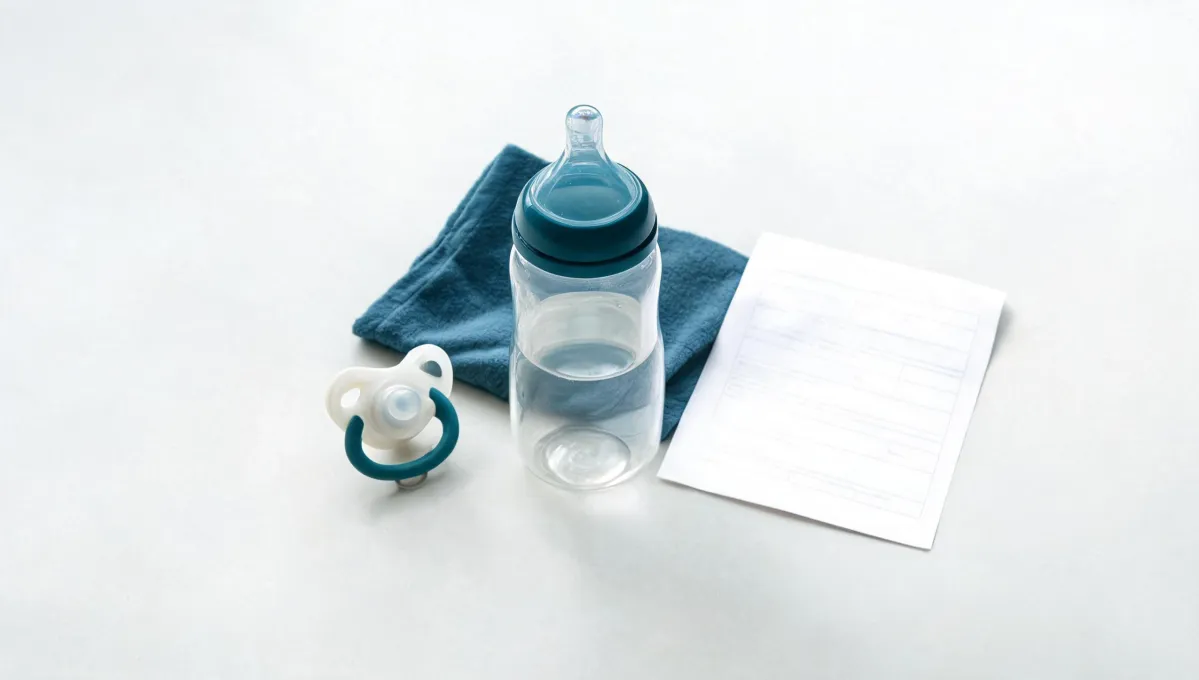
On a rainy Tuesday, a mom added the Flexy Silicone Pacifier to her cart after spotting the $4.49 starting price on nanobebe’s homepage. She wanted a pacifier that wouldn't trap moisture after sterilization, and the one-piece silicone body dried fast enough that a clean pacifier was always ready. For the first weeks, that one-piece design compares favorably to traditional plastic pacifiers because it removes moisture-trapping crevices. That raises the real question: is this easy-to-clean, stage-matched design worth choosing over a basic plastic-guard pacifier? Understanding what that construction changes helps you pick between the newborn version and the Active Flexy later-version before you order. At that price, it's a low-risk trial. This review walks through the official facts, the softness myth, and a simple rule for choosing the right stage.
Flexy Newborn Pacifier: The One-Piece Silicone Difference
On a rainy Tuesday in mid-October, a mom added the Flexy Silicone Pacifier to her cart after spotting the $4.49 starting price on nanobebe’s homepage. She was packing her hospital bag for a late-November due date and wanted a pacifier that wouldn't trap moisture after sterilization. Once her daughter arrived, she sterilized the Flexy twice a day, and the one-piece silicone body dried fast enough that a clean pacifier was always ready. For the first weeks, that one-piece design compares favorably to traditional plastic pacifiers because it removes moisture-trapping crevices. That experience raises the real question: is this easy-to-clean, stage-matched design worth choosing over a basic plastic-guard pacifier? Understanding what that construction changes helps you pick between the newborn version and the Active Flexy later-version before you order. This review walks through the official facts, the softness myth, and a simple rule for choosing the right stage.
On nanobebe’s product page, the phrase “100% Silicone Pacifiers” appears above a grid of feeding gear. That label means the Flexy is one continuous piece of silicone, not a rubber nipple fused to a plastic shield. With no separate guard, there are no seams where milk or moisture can hide after a quick rinse. The page pairs this with free shipping over $50, and lines pacifiers up with bottles and sterilizers, hinting at how the design fits cleaning routines. For a parent sterilizing several times a day, one-piece construction means fewer nooks to scrub and a faster path from dirty to dry. It also means the part touching the baby’s gums is the same smooth material you’re cleaning, with no hard plastic edge. That consistency makes the “newborn-friendly” label more than marketing—it’s design logic that follows from the material choice.
Nanobébé’s about page frames each product as a research-driven solution meant to simplify daily routines. Comparing the Flexy to a classic pacifier makes the point immediately. A traditional pacifier often combines a rubber nipple, a rigid plastic shield, and sometimes a ring or handle—three materials meeting at small junctions that trap moisture and need inspection. The Flexy replaces that assembly with one silicone form, so the only junction you worry about is between pacifier and sterilizer. That’s the difference between tossing into a drying rack and checking every seam for trapped milk. The about page’s language about simplifying routines comes alive in this design choice, which is why the Flexy feels like a deliberate answer to the “why is there a plastic part” complaint. That’s a small detail with a big impact on nightly cleanup.
Myth: 'Softer Means Better' for Newborn Pacifiers
Many parents assume a newborn pacifier’s only job is to be soft, so they judge every option by squeezing the nipple. That instinct makes sense—newborn gums are tender—but “softer is better” breaks down when you look at how a pacifier line is structured. Softness is one thing; fit and stage are another. A pacifier that feels great in your hand can still be wrong if it doesn’t match the baby’s age and mouth development. When you shop for a newborn, the real variable isn’t squishiness; it’s whether the pacifier was designed for the newborn stage at all. Perceiving a pacifier purely by softness can lead you to buy the wrong stage, and you won’t notice until after you’ve opened the package. That’s a mistake you’ll regret.
Scroll through nanobebe’s full collection and the stage split is impossible to miss. The shop-all page lists “Active Flexy Pacifier (4m+)” as a separate item from the standard Flexy Silicone Pacifiers, which you’d associate with a newborn registry. That distinction matters because it tells you the brand expects the pacifier to change as the baby grows. The 4m+ version suits babies who have started teething, with a shape that accommodates emerging teeth. The newborn version is for the early weeks when gums are smooth and the mouth is small. Official pages don’t dwell on softness because there isn’t a difference; both are made of the same silicone. What changes is the geometry and the intended stage, which turns “which Flexy?” into a question about your baby’s age, not your finger test. That’s the kind of detail reviews often miss. The stage marker is the only real difference at a glance, but it changes how the pacifier fits and functions.
Matching the stage isn’t complicated, and the official price list makes it concrete. On the same page, “Flexy Silicone Pacifiers” start at $4.49, while the Active Flexy 4m+ sits in the same collection without a dramatic markup. That close pricing means the cost won’t force you into the wrong stage—you can choose based on your baby’s mouth, not your budget. The rule is simple: use the basic Flexy from birth until you see the first signs of teething, usually around four months, then switch to the Active 4m+ version. If your baby shows early teething signs before four months—more drool, gum-chewing, restless nights—the Active version is the safer bet from day one. The official page doesn’t print this rule, but it’s the natural conclusion from listing both stages side by side at overlapping prices. That’s the practical takeaway for a parent in a hurry.
What the Official Pages Actually Show (Prices, Stage Options, and Shipping)
A visit to nanobebe’s homepage shows why the basic Flexy feels like a low-risk experiment. The site leads with “Sale price From $4.49” for Flexy Silicone Pacifiers, and the header repeats “FREE SHIPPING on orders over $50.” That combination changes the math for a parent who wants to try one before committing to a set. At $4.49, a single pacifier is cheaper than a coffee, and if you’re already ordering bottles or a breast pump, the free-shipping threshold may be within reach. The page also groups pacifiers with sterilizers and drying racks, nudging you toward a complete cleaning kit. The price anchor appears in the shop-all collection, so it’s not a one-off sale—it’s the established starting point. For a newborn parent, that low entry price removes the “sunk cost” worry. Even if your baby rejects the first pacifier, you’re not out much more than a takeout lunch.
Nanobébé’s about page spends more time on philosophy than specs. It describes a mission of “research-driven solutions” and products designed to “simplify your daily routine,” with every item beginning from real parenting needs. That language explains why the Flexy exists as one-piece silicone: fewer parts to clean, fewer places for bacteria, fewer small frustrations during late-night feedings. The page repeats the tagline “Because Nutrients Matter,” which originally applied to bottles but extends to the whole feeding ecosystem. For a reviewer, this tells you the Flexy isn’t an afterthought; it sits alongside award-winning bottles and monitors, and the brand treats it as part of a connected feeding routine. When official pages lean on mission statements, it’s easy to roll your eyes, but here the philosophy matches the product’s concrete design choices.
Official store pages give you the material, the price, and the shipping math, but they won’t tell you whether your particular baby will take the pacifier. That’s where review context comes in. A parent scanning reviews wants to know if the shape stays in a newborn’s mouth, whether the silicone picks up lint, or how long it holds up to chewing. None of that appears on the product listing, because official pages are designed to sell, not to describe quirks. The honest way to use both is to let the official page establish baseline facts—construction, price, shipping—and let reviews fill in behavioral details. The official page tells you what the product is; reviews tell you what it’s like to live with it.
Flexy Newborn vs Active Flexy 4m+: How to Decide
Here’s the moment where many parents stall: you’ve read about the one-piece silicone design, seen the $4.49 price, and still can’t decide which version to put in the cart. The shop-all page doesn’t help by placing “Flexy Silicone Pacifiers” and “Active Flexy Pacifier (4m+)” in the same grid. One father hit this fork at four months, when he spotted a tooth on his baby’s bottom gum. He had used the basic Flexy since week two, but once that tooth appeared, the 4m+ version became the obvious next step—and because the collection page listed both at nearly the same price, the switch didn't hurt his wallet. If your baby is under four months and hasn’t shown any tooth buds, the basic Flexy seems obvious, but teething can start earlier, so you don’t want a six-pack that will be useless in weeks. The practical question isn’t which is better; it’s which matches your baby’s current stage and how quickly it’s likely to change.
Looking at the same collection page, the Active Flexy 4m+ is listed right next to the standard Flexy Silicone Pacifiers, with the age marker as the only clear signal. There’s no separate “newborn” tag on the basic Flexy; the absence of a “4m+” label tells you it’s for the earlier stage. The collection also shows drying racks and sterilizers, reinforcing that the pacifier is part of a cleaning system. From a practical standpoint, the variant evidence suggests the brand expects most parents to start with the standard Flexy and move to Active when teething begins. Both appearing in the same collection without a large price gap means the switch won’t break your budget. Some babies reach the 4m+ stage early; for them, the Active version is the better first purchase.
Here’s a decision rule that cuts through the confusion: buy the basic Flexy if your baby is under four months and shows no teething signs; buy the Active Flexy 4m+ if your baby is older or already showing signs. If you’re shopping before the baby arrives, choose the basic Flexy and don’t stock up—buy one or two, because you’ll have time to switch. The official store’s free-shipping threshold of $50 can still be reached by adding a second pacifier or a silicone bottle, turning the trial into a low-risk bundle. What this rule acknowledges is that the basic Flexy is a time-limited tool: it’s not designed to be the last pacifier you buy. Matching the stage to the mouth avoids waste and gets cleaning benefits exactly when hygiene matters most.
The Bottom Line: When the Flexy Newborn Makes Sense
Remember that half-packed diaper bag from the opening? Now you can finish it. If your newborn has no signs of teething, the basic Flexy pacifier can go into the side pocket with confidence, knowing you chose the stage correctly and that the one-piece silicone design will hold up to the constant rinse-and-repeat cycle of the first weeks. The scene also changes the way you read the price tag: the cost of trying one is low enough that you’re not betting your budget on a lucky guess. You’re making a small, informed purchase that leaves room to switch to the Active version later. The diaper bag now has a pacifier, and you have a clear answer: the basic Flexy works when it’s matched to the right stage.
The verdict is straightforward: buy the basic Flexy pacifier if you’re preparing for the early newborn weeks, and treat it as a deliberate, easy-to-clean choice rather than a compromise. The same evidence that supports it—one-piece silicone construction, the $4.49 starting price, and the $50 free-shipping threshold—also marks the boundaries. This pacifier is not the right call if your baby has started teething, if you need a pacifier to last past the fourth month, or if your baby rejects anything not shaped like a traditional nipple. For those situations, the Active Flexy version is the better fit, and the official page lists it clearly. What makes the basic Flexy worth recommending is its honesty about its own limits: it does one job—clean, gentle soothing for a newborn mouth—and does it without the extra parts that create cleanup headaches. If that’s your stage, the basic Flexy earns its place; if not, you know why it shouldn’t be in your bag.
The basic Flexy earns its place when the stage is right—and not before.

Jane Smith
I’m Jane Smith, a senior content writer with over 15 years of experience in the packaging and printing industry. I specialize in writing about the latest trends, technologies, and best practices in packaging design, sustainability, and printing techniques. My goal is to help businesses understand complex printing processes and design solutions that enhance both product packaging and brand visibility.