Nanobébé Bottles for Breastfed Babies: When They Help, When They Don't
Posted on 2026-08-20 by Jane Smith
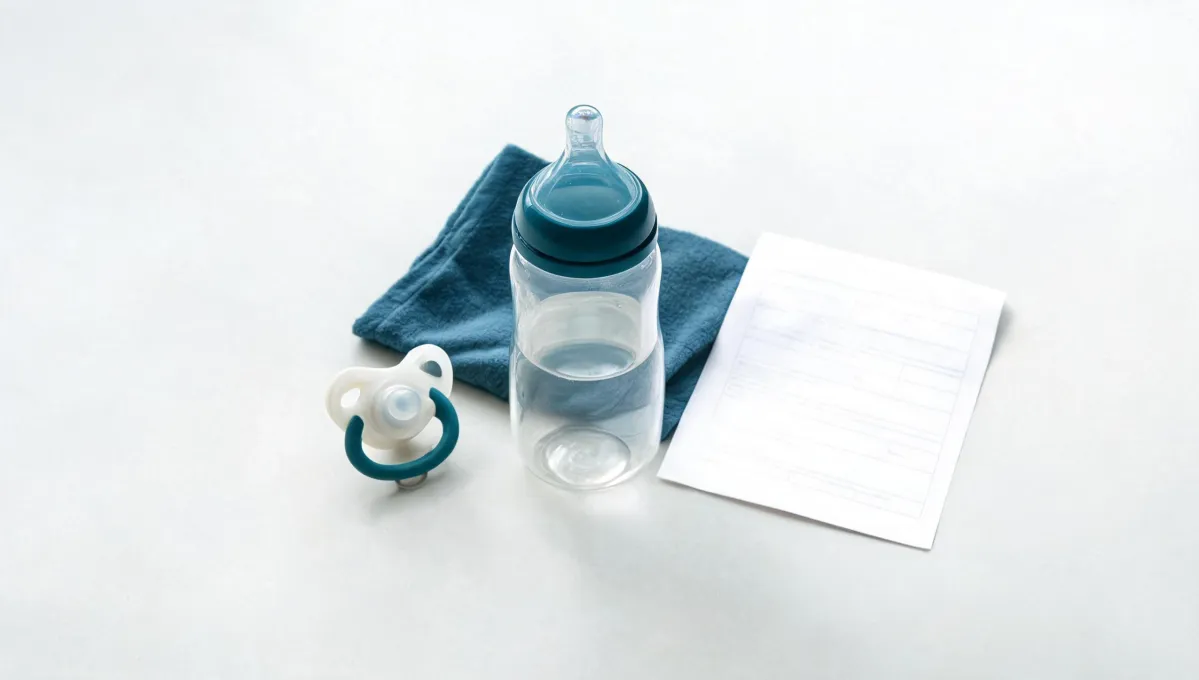
Nanobébé bottles can be a genuinely good fit for many breastfed babies, but they are not the effortless, guaranteed fix that their marketing implies. The wide, shallow nipple does encourage a deep latch, and that matters enormously when you're trying to switch between breast and bottle without confusing your baby. Still, whether that shape actually works depends on your baby's mouth anatomy, your feeding technique, and your willingness to keep up with the cleaning routine. The honest verdict is that these bottles are a tool, not a promise — they help when matched well, and they frustrate when they aren't. If you're a breastfeeding parent weighing another bottle purchase, the question isn't simply 'are they good?' but 'are they good for my baby?' That distinction separates a wasted purchase from a feeding solution that keeps you and your baby calm. And it's the distinction this guide walks through, step by step, with the evidence from Nanobébé's own product pages.
The promise of a breast-like bottle is only half the story
Are Nanobébé bottles good for breastfed babies? For many, yes—but they are not the effortless, guaranteed fix that their marketing implies. The bottle's wide, shallow nipple does encourage a deep latch, and that matters enormously when you're trying to switch between breast and bottle without confusing your baby. Still, whether that shape actually works depends on your baby's mouth anatomy, your feeding technique, and your willingness to keep up with the cleaning routine. The honest verdict is that these bottles are a tool, not a promise — they help when matched well, and they frustrate when they aren't. If you're a breastfeeding parent weighing another bottle purchase, the question isn't simply 'are they good?' but 'are they good for my baby?' That distinction separates a wasted purchase from a feeding solution that keeps you and your baby calm. And it's the distinction this guide walks through, step by step, with the evidence from Nanobébé's own product pages.
Most parents discover Nanobébé the same way: they're returning to work, they need bottles for daytime feedings, and they want something that won't undo the nursing relationship they've built. The brand's own pages lean into that hope. Nanobébé calls itself 'research-driven' and headlines its site with 'Because Nutrients Matter,' while its product line includes a 'Breastmilk Baby Bottle' regularly priced at $18.99 and a 'Flexy Silicone Baby Bottle' in 9oz at $18.99. That language makes it easy to assume a breast-shaped bottle automatically protects your baby's latch and your milk supply. But the marketing doesn't tell you the conditions under which that design pays off. The real story is more conditional, and that's why parents end up confused when a bottle that's 'designed for breastfeeding' doesn't work on week two.
What the wide, shallow nipple actually does
The reason a wide, shallow nipple can help a breastfed baby comes down to the mechanics of a deep latch. When your baby breastfeeds, she takes a big mouthful of breast tissue, not just the tip of the nipple. That's the pattern a bottle needs to mimic if you want to avoid nipple confusion or a lazy latch. Nanobébé's 'Breastmilk Baby Bottle' is explicitly named for this goal, and the product category pages list it alongside 'Award-Winning Anti-Colic Baby Bottles,' signaling that the wide, breast-shaped nipple is the core feature. In practice, the broad base encourages your baby to open wide and compress the silicone at the same point where she'd press on your breast. That combination supports a latch that feels familiar, which can make the bottle-to-breast transition smoother than a narrow standard nipple ever could. But the design only works if your baby actually opens wide enough to reach that compression zone.
The anti-colic promise in Nanobébé's lineup comes from a venting system designed to keep air out of the milk, plus a soft silicone body that flexes like breast tissue. The About page describes 'research-driven solutions' and 'intentional design,' which sounds reassuring until you realize the vent only functions when you handle the bottle correctly. The nipple must be completely filled with milk, not air, and you need to hold the bottle at an angle that lets the vent channel sit above the liquid. When you do that, the negative pressure stays low and your baby swallows less air, which reduces gassiness. The silicone material also collapses slightly with each suck, giving a feel closer to a breast than rigid plastic. That's a genuine functional difference, not just a marketing label. But it also means there's a learning curve: if you tip the bottle too steeply, the vent chokes and your baby gulps, and you'll blame the bottle when the real culprit is technique.
Design alone doesn't guarantee acceptance, and that's the counterpoint every parent needs to hear. A breast-shaped nipple is only an advantage if it matches your baby's preferred latch. Some babies are absolutely comfortable with a short, wide shape — they came out of the womb looking for a breast-like blob. Others have a strong preference for a longer, tapered nipple, especially if they've already used a standard bottle or a pacifier with a different shape. For those babies, the Nanobébé shape can feel as wrong as a narrow bottle feels to a strict breastfed newborn. The 'breast-like' label creates an expectation of universal acceptance, but the mouth is a stubborn taster. If your baby fusses, turns her head, or chews but doesn't suck, the shape isn't inherently bad — it's just not her shape.
The three fit conditions that decide whether it works
So how do you know if the wide nipple is right for your baby? Start by watching how she latches to the breast. A baby who opens wide, takes in a deep mouthful, and laps with a rhythm is a good candidate for Nanobébé's short, broad nipple. Babies who latch more shallowly, who prefer a pointed nipple to suck like a straw, or who have a very small mouth that struggles to seal around a wide base may do better with a narrower bottle. Age also plays a role: a newborn's mouth is small, so the 5oz bottle's smaller nipple may feel more proportionate, while an older, hungrier baby may need the 9oz size to keep up with increased appetite. The key is to watch the baby, not the brochure. If the first offering produces clicking, milk dripping from the corners, or obvious frustration, the shape is a mismatch — no amount of 'breast-like' marketing can override a bad fit.
Size selection is where many parents trip up, and Nanobébé's product pages make the options visible: the Flexy Silicone Baby Bottle comes in 5oz at $16.99 (regularly $17.99) and 9oz at $18.99, while the Breastmilk Baby Bottle is listed at $16.99 with a regular price of $18.99. There's also a 'Breastmilk Bottle Starter Set' and a 'Ultimate Newborn Baby Bottle Feeding Set' around $39.99 or $34.99, which bundle both sizes. In the first two months, a 5oz bottle is usually enough because a newborn's stomach holds only a few ounces at a time. If you jump straight to the 9oz, the wide nipple may deliver milk faster than your baby can manage, causing gulping and fussiness. If you stay with 5oz too long, your baby will get frustrated when half the bottle is empty but the flow is still slow. Choosing the size that matches your baby's age and appetite is as important as choosing the shape.
The real trade-off: convenience vs. breast-like feel
How does Nanobébé stack up against a conventional anti-colic bottle? The trade-off is simple: a standard bottle with a narrow nipple is often cheaper, has fewer parts, and is easier to clean. You can find a decent anti-colic bottle for $10 or less, and the learning curve is nearly zero — screw on the nipple, tip it up, feed. Nanobébé's ergonomic shape and venting system cost more, and the wide base means you have to be more careful about angle and assembly. The payoff is the potential for an easier latch for breastfed babies who accept the shape. But if your baby doesn't take to the wide nipple, you've spent more money for a bottle that works no better than a basic one. The comparison isn't about which is 'best' in the abstract; it's about which failure mode you can tolerate. A conventional bottle fails by creating a shallow latch; Nanobébé fails by demanding a specific latch that your baby may not offer.
The cleaning routine is where the brand's 'nutrients matter' message meets reality. Nanobébé's bottles have a wide-mouth nipple, a vent piece, a collar, and a body — and every component that touches milk needs washing after each use. External guidance, like the sterilization instructions from Exclusive Pumping, cites the CDC's recommendation to sanitize feeding items at least once daily, especially for babies under 3 months, preemies, or those with weakened immune systems. That means for the first few months you're doing more than a rinse: you're disassembling, washing, and sterilizing every day. A simpler bottle with fewer parts takes a fraction of that time. The trade-off is real: the same pieces that make the bottle feel breast-like also make it more work. If your baby is older and healthy, you can back off to sanitizing every few days, but the daily routine for newborns is a genuine commitment.
Who does this trade-off actually favor? You're a strong candidate if your baby latches well at the breast, you've got time and patience for careful cleaning, and you're in the early months when the breast-to-bottle transition is most delicate. You're a weaker candidate if you're on a tight budget, you prefer minimalist gear, or your baby already has strong opinions about bottle shape. Also consider how often the bottle will be used: if it's an occasional bottle for a date night, even a picky baby can be coaxed; if it's the primary daytime feeder while you're at work, the shape and cleaning routine matter far more. The right question is not 'is it worth it?' but 'is it worth it for my daily rhythm?'
The verdict: when to say yes (and when to pass)
Here is the verdict: Nanobébé bottles are a good choice for many breastfed babies — but only with conditions. Choose the size that matches your baby's age, use the vent correctly by keeping the nipple milk-filled and the bottle angled, and commit to the daily sterilizing routine for young infants. When those conditions are met, the wide, shallow nipple can genuinely support a deep latch and make the switch from breast to bottle less disruptive. Parents who do this often report that their baby takes the bottle calmly, without the frantic gulping or milk dripping that comes from a mismatched nipple. That's the best-case outcome, and it's achievable for a substantial number of families. But that success depends on the same conditions we've walked through: a baby who opens wide for the short, broad nipple, a parent who reads the baby's cues, and a vent that stays clear. Forget any one of those, and you'll see exactly why some parents call it a miss: clicking, gulping, and a baby who turns away after an ounce. The bottle isn't defective — the match is.
The boundary is just as clear. If your baby refuses the wide nipple after several honest attempts, or if feeding time becomes a battle full of turning and crying, Nanobébé is not for you — and that's a statement about the match, not a failure of your parenting. The reusable decision rule is this: watch the baby, not the label. Look for a wide-open latch, smooth rhythm, and no signs of air after feeding. If you see those, the bottle is working. If you don't, try a different shape, because the‘best’ bottle is the one your baby accepts. You can always return to breast fully and use bottles only occasionally; the feeding journey does not demand a single perfect bottle.
In the end, the only test that matters is the one at your kitchen table: offer the bottle, watch the latch, and trust your baby's verdict.

Jane Smith
I’m Jane Smith, a senior content writer with over 15 years of experience in the packaging and printing industry. I specialize in writing about the latest trends, technologies, and best practices in packaging design, sustainability, and printing techniques. My goal is to help businesses understand complex printing processes and design solutions that enhance both product packaging and brand visibility.