Nanobebe Flexy Newborn Pacifier: Does a Soft One-Piece Design Really Hold Up?
Posted on 2026-08-14 by Jane Smith
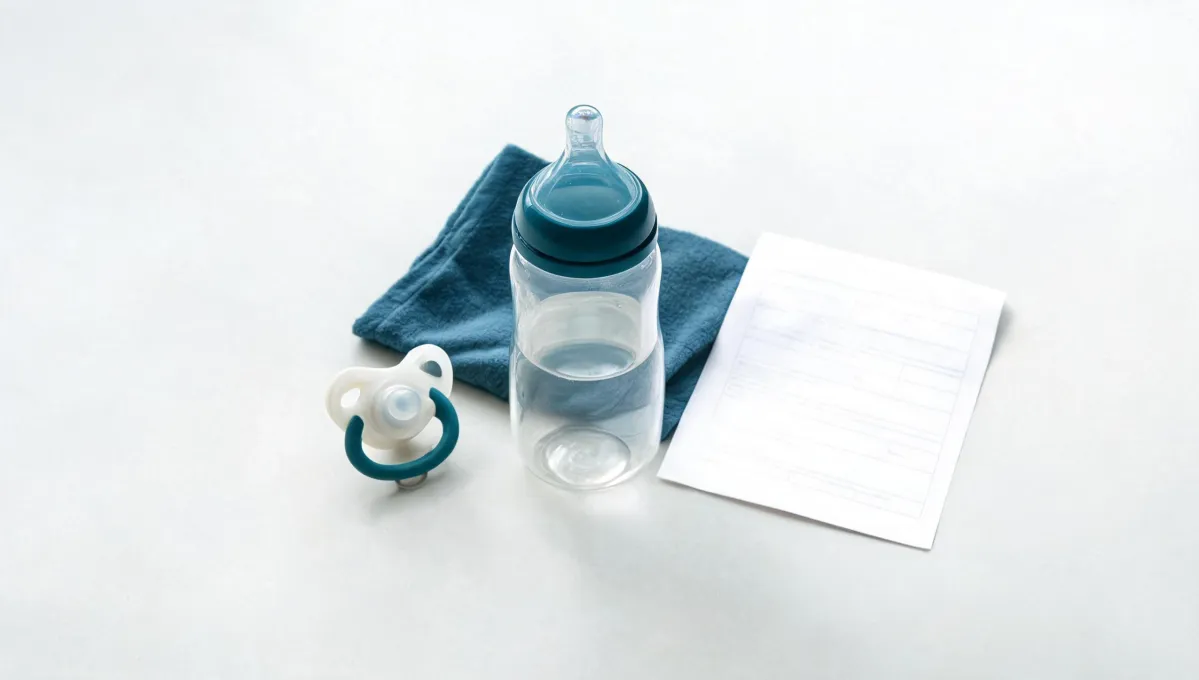
The Nanobebe Flexy is the rare pacifier that makes you think twice before dismissing it as an accessory. Picture the first evening you finally sit down with a newborn pacifier you've been meaning to try. The package has already been opened once, the plastic tray set aside, and there it is: the Nanobebe Flexy, a pacifier the brand lists among its Award-Winning Baby Care Products. The retail page lists Flexy Silicone Pacifiers from $4.49, which makes it one of the easiest low-cost experiments in baby gear. But the quiet question behind the price is whether this slender, soft piece of silicone will actually stay in your baby's mouth. You know the brand's promise—baby-safe materials, award-winning design—yet no product page tells you how your particular newborn will latch. That's the gap this review tries to close. Maybe you unboxed it during a late feed, the kind where the baby's eyes are half-closed and the house is finally quiet. You checked the Flexy Silicone Pacifiers listing one more time, noticing the free shipping threshold of $50 and a 10% off gift card promo sitting in the corner of the page. Those details soften the risk: even if this pacifier doesn't become the one, the outlay stays under five dollars.
Unboxing the Flexy: A First-Hour Snapshot
The Nanobebe Flexy is the rare pacifier that makes you think twice before dismissing it as an accessory. Picture the first evening you finally sit down with a newborn pacifier you've been meaning to try. The package has already been opened once, the plastic tray set aside, and there it is: the Nanobebe Flexy, a pacifier the brand lists among its Award-Winning Baby Care Products. The retail page lists Flexy Silicone Pacifiers from $4.49, which makes it one of the easiest low-cost experiments in baby gear. But the quiet question behind the price is whether this slender, soft piece of silicone will actually stay in your baby's mouth. You know the brand's promise—baby-safe materials, award-winning design—yet no product page tells you how your particular newborn will latch. That's the gap this review tries to close. Maybe you unboxed it during a late feed, the kind where the baby's eyes are half-closed and the house is finally quiet. You checked the Flexy Silicone Pacifiers listing one more time, noticing the free shipping threshold of $50 and a 10% off gift card promo sitting in the corner of the page. Those details soften the risk: even if this pacifier doesn't become the one, the outlay stays under five dollars.
The first hour will tell you more than the packaging ever could. Once your newborn is fed, changed, and swaddled, the pacifier becomes the last thing between you and a stretch of sleep. You offer it as you have every pacifier before, but this one feels different right away. The skirt is thinner than the hospital pacifiers, the silicone softer, and the whole piece flexes when you press it. Your baby takes it, works it for a few seconds, then lets it fall. You try again. This time the latch holds, and you catch yourself watching the tiny jaw instead of the clock. The nursery settles into that rhythm, and you start to wonder: was that luck, or is there something about this particular design that made the difference? That question—whether the Flexy's softness is a help or a hindrance—is what the rest of this story works through.
The Big Myth: All Pacifiers Are Basically the Same
The assumption that all pacifiers are basically the same is the most expensive myth in the baby aisle. Walk into any baby aisle and you'll see the same shapes in a dozen brands: a shield, a nipple, a ring. It's easy to conclude that a pacifier is a pacifier, that the only real variables are size and whether your baby likes the taste of silicone. New parents hear 'newborn' and assume it's simply a smaller version, with the same material, firmness, and feel against the palate. That assumption feels harmless, but it shapes the shopping decision in a subtle way. When every pacifier looks equal, price and packaging become the tiebreakers, and a parent picks the cheapest or the cutest. A newborn's mouth is not a generic cavity; it's learning to coordinate suction, tongue placement, and jaw rhythm, and a pacifier that feels 'fine' to an adult hand can feel different to a baby's gums. So before you dismiss the Flexy as 'just another pacifier,' it's worth asking whether those visible differences—thinner skirt, softer silicone, seamless build—are cosmetic or functional.
Nanobebe's own positioning contradicts the 'all alike' story in a way that matters for newborns. The brand describes itself as building research-driven solutions, with every product in its ecosystem designed to simplify the daily routine; the About page frames the goal as creating products that support the bond between parent and child. That language could be dismissed as marketing, but it points at a genuine difference in how the company treats the pacifier. The Flexy isn't a standalone accessory dropped into the lineup. It's engineered to work with the Flexy bottle system, sharing a material language and a mouthfeel that are meant to feel familiar across feeding moments. When a baby is moving between breast, bottle, and pacifier in the same afternoon, a consistent texture and shape can reduce confusion. That's the counter-argument to 'it's all the same silicone.' The material might be the same family, but the structure—how thin the edges are, how the silicone flexes, how the whole piece behaves under a tiny jaw—changes the experience. A pacifier that looks similar in a display case can perform very differently at 2 a.m.
What the Flexy Actually Does Differently
The material and the construction are where the Flexy first separates itself from the crowd. Start with the material: the Flexy Silicone Pacifiers are 100% silicone, which matters more than the packaging suggests. Many pacifiers use firmer medical-grade silicone for the nipple and softer for the shield, or add seams. Flexy is a one-piece build with no seam lines, which means fewer crevices for milk residue and less irritation against a newborn's lips. The official page groups it under '100% Silicone Pacifiers,' and that descriptor means: the whole pacifier responds to pressure as a single unit rather than bending stiffly at a joint. For a newborn, whose mouth is small and whose suction is uncoordinated, a soft, thin skirt sits more gently against the gums and allows the baby to close their mouth more naturally. The trade-off is that this same softness can be trickier for babies who prefer a firmer, more anchored feel—which is exactly the kind of individual difference the rest of this review will ask you to watch for.
The Flexy's place in the Nanobebe ecosystem turns it from a pacifier into a system. Scroll the official 'Shop All' collection and you'll see Flexy Silicone Baby Bottles in 5oz and 9oz sitting alongside the pacifiers, with the same name and visual language. That adjacency is not an accident. The bottle line includes a 5oz size at $16.99 (regularly $17.99) and a 9oz size at $18.99, and the pacifiers start at $4.49, making the whole system unusually accessible to test. For a newborn, the benefit is continuity: the nipple shape and flex of the bottle are designed to match the pacifier, so a baby who learns to drink from the Flexy bottle meets the same familiar softness when the pacifier replaces the teat. Parents who already use Flexy bottles for feeding get a more coherent set of cues for their baby's mouth. The ecosystem argument is simple: fewer surprises during the transition between feeding and soothing.
These design choices translate into verifiable benefits. The Flexy pacifier page appears on the same homepage as the wearable breast pump and the Aura baby monitor, under the 'Award-Winning Baby Care Products' banner, signaling a complete system, not a throwaway. The price, though, is anything but premium: the pacifier starts at $4.49, while the bottles next to it are priced from $18.99 for 9oz and $16.99 for 5oz. That low entry point means you can test the pacifier's fit without committing to the whole bottle set. The brand also offers free shipping on orders over $50 and runs a 10% off gift card promo, which further lowers the cost of a trial bundle. For a newborn, the practical benefit is simple: you're not betting a large sum on a single piece of silicone. You're spending less than the price of a coffee to learn whether your baby prefers a soft, thin-skirted pacifier or rejects it in favor of something firmer.
For Newborns: Price, Fit, and the 4m+ Question
The presence of an Active Flexy pacifier marked 4m+ complicates the 'newborn' label before you ever reach for a size. This is where the label gets tricky: the same collection lists an Active Flexy Pacifier (4m+) alongside the Flexy Silicone Pacifiers, raising the question: if there's a 4m+ version, is there a separate newborn version? The answer, from the available product structure, is not exactly. The Flexy pacifier appears as a single SKU, while the Active Flexy is explicitly staged for older babies. That staging suggests the brand intends the original Flexy for early use, but it doesn't guarantee fit for every newborn. A pacifier that suits a two-week-old with a strong latch might slide out for a different baby with a shallower suck. The age label is a starting point, not a verdict. The same page shows bottles in 5oz and 9oz, feeding sets, and the Active Flexy, so the 'newborn' context is really about early feeding and soothing, not a distinct product line.
The price structure turns the newborn question into simple arithmetic: compare the numbers and the choice becomes clearer. The Flexy Silicone Pacifiers start at $4.49—the cheapest way into the system. Around it, the store shows nursing pads at $9.99, bottle warmer bowls and breast pump adapters in the $5.49–$11.99 range, and the Aura monitor floor stand at $69.99, showing how the brand prices accessories relative to core products. Two practical takeaways come out of this. First, the pacifier is inexpensive enough to treat as a trial, not a commitment. Second, if you're already paying $16.99 for a 5oz Flexy bottle or $18.99 for a 9oz one, adding a $4.49 pacifier that shares the same design logic is a low-cost extension of a system you already trust. The free shipping threshold of $50 also means a small order of bottles plus a pacifier can cross the line without much padding.
So what does 'newborn suitability' actually mean for the Flexy? It means observing your baby's mouth behavior rather than trusting a label. When you offer the pacifier, watch how the baby latches: does the thin skirt tuck under the lips without gaps, or does the baby push it out with the tongue? A newborn with a strong, coordinated suck will likely find the soft one-piece shape comfortable. A baby who prefers a firmer nipple may reject it within seconds. The 100% silicone material is reassuring for safety, but safety and acceptance are different questions. The Flexy's thin edges and flexible body are a genuine design choice, and that choice has a cost: it won't suit every newborn. The practical rule is to test it during a calm, non-hungry moment, watch the latch for a few minutes, and be ready to try a different shape if the baby shows clear signs of frustration.
Back in the Nursery: How to Decide for Your Baby
The decision rule for the Flexy is: use your own baby's latch as the judges' panel, and let the low price make the trial painless. By now the evidence is in hand, and the rule is simpler than the marketing suggests. If you already use Flexy bottles, add the Flexy pacifier and give your baby the same mouthfeel across feeding and soothing—the brand's research-driven approach, as described in its about page, is designed around consistency within the ecosystem. If you don't use Flexy bottles, the pacifier is still worth a try at $4.49, but keep your expectations calibrated: the softness is a feature for some babies and a flaw for others. Watch the latch for two things: whether the baby closes their lips around the thin skirt, and whether the pacifier stays in place for more than a couple of minutes. If both happen, you've found a pacifier that works with your newborn's natural mouth movements. If not, set it aside and try a firmer design. The cost of the experiment is negligible, and the insight you gain—about your baby's oral preferences—is more valuable than the pacifier itself.
Back in that nursery, the scene has moved on. The first-hours skepticism has turned into a working nighttime routine. You've learned that the Flexy isn't magic, and it isn't universal; it's a well-designed pacifier that earns its place when it matches your baby's latch. The brand's promise of baby-safe materials and award-winning design is visible in the 100% silicone build and the $4.49 entry price, but the final judgment comes from the tiny mouth that accepted it on the third try. So the answer to the question from the opening scene—does the Flexy really suit a newborn?—is this: it suits the newborn who latches well, and you can find that out for less than the cost of a takeout coffee. Keep the backup pacifier nearby, trust what you see, and let the nursery decide. You're not picking the softest pacifier on the shelf; you're picking the one your baby's jaw has already voted for.
Back in that nursery, the scene has moved on. The first-hours skepticism has turned into a working nighttime routine. You've learned that the Flexy isn't magic, and it isn't universal; it's a well-designed pacifier that earns its place when it matches your baby's latch. The brand's promise of baby-safe materials and award-winning design is visible in the 100% silicone build and the $4.49 entry price, but the final judgment comes from the tiny mouth that accepted it on the third try. So the answer to the question from the opening scene—does the Flexy really suit a newborn?—is this: it suits the newborn who latches well, and you can find that out for less than the cost of a takeout coffee. Keep the backup pacifier nearby, trust what you see, and let the nursery decide. You're not picking the softest pacifier on the shelf; you're picking the one your baby's jaw has already voted for.

Jane Smith
I’m Jane Smith, a senior content writer with over 15 years of experience in the packaging and printing industry. I specialize in writing about the latest trends, technologies, and best practices in packaging design, sustainability, and printing techniques. My goal is to help businesses understand complex printing processes and design solutions that enhance both product packaging and brand visibility.