nanobebe Flexy Newborn Pacifier: Which Silicone Pacifier Is Right for Your Baby?
Posted on 2026-08-24 by Jane Smith
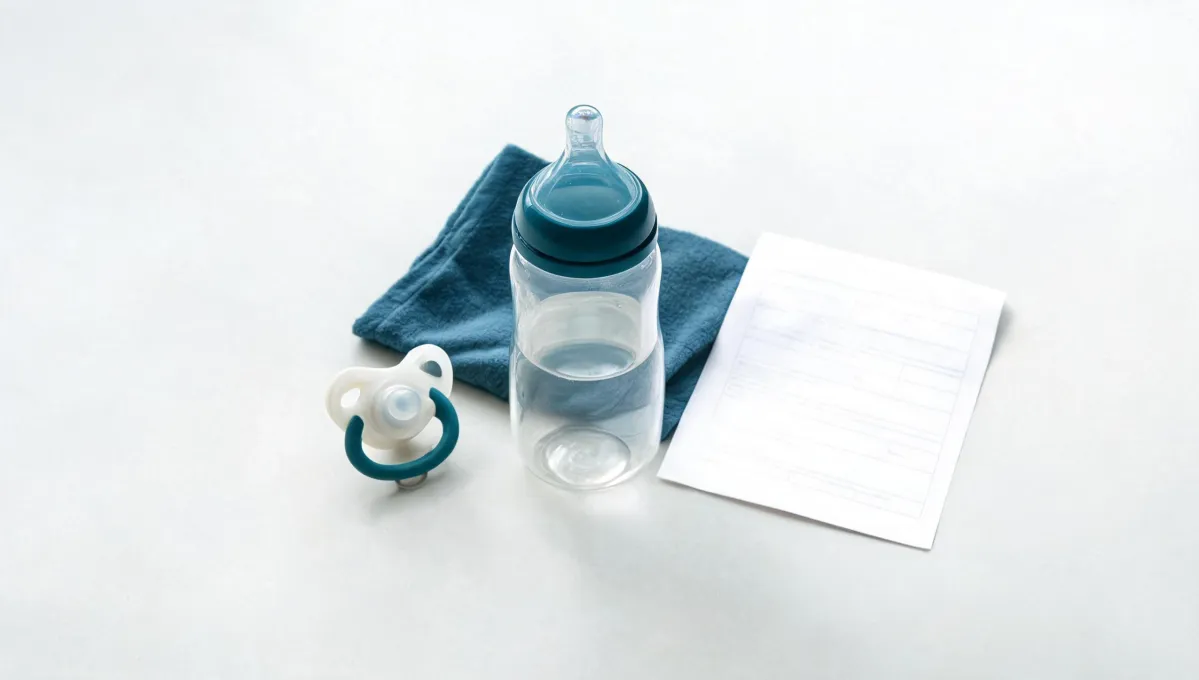
Tuesday evening, you're standing in the baby aisle of a big-box store, phone in one hand and a nanobebe Flexy Silicone Pacifier package in the other. The price tag reads $4.49, and a sign above the display promises free shipping on orders over $50. Your newborn is dozing in the stroller, but you've been frozen here for twenty minutes, because every pacifier on the shelf claims to be 'orthodontic' or 'natural feel.' One package says '100% Silicone,' another says 'Active Flexy (4m+).' You remember your pediatrician saying that material matters for a newborn's gums, but how do you actually choose? The brand's tagline, 'Award-Winning Baby Care Products,' is printed across the display, but you've learned not to trust shelf marketing alone. You need something more than a promise — you need to know which one will work tonight, when the fussing starts. You have to decide before you head home.
The Aisle of Indecision
Tuesday evening, you stand in the baby aisle of a big-box store, phone in one hand and a nanobebe Flexy Silicone Pacifier package in the other. The price tag reads $4.49, and a sign above the display promises free shipping on orders over $50. Your newborn is dozing in the stroller, but you've been frozen here for twenty minutes, because every pacifier on the shelf claims to be 'orthodontic' or 'natural feel.' One package says '100% Silicone,' another says 'Active Flexy (4m+).' You remember your pediatrician saying that material matters for a newborn's gums, but how do you actually choose? The brand's tagline, 'Award-Winning Baby Care Products,' is printed across the display, but you've learned not to trust shelf marketing alone. You need something more than a promise — you need to know which one will work tonight, when the fussing starts. You must decide before heading home.
The clock is ticking on your decision. Should you reach for the no-name pack that costs less than a coffee, or the pricier option tucked behind the glass? And once you've narrowed it to nanobebe, there's another fork: the standard Flexy Silicone Pacifier or the Active Flexy Pacifier (4m+)? The newborn phase is short, so you don't want to overspend, but you also don't want to buy something that irritates your baby's gums or falls apart in the sterilizer. Which one belongs in your cart tonight? The answer depends on understanding two things: what the material is made of, and how the design matches your baby's age. You need to get it right before you leave the store.
Here's the initial answer: the nanobebe Flexy Silicone Pacifier, starting at $4.49, is a solid pick for a newborn. The store page highlights that these pacifiers are 100% silicone, a material known for being soft, durable, and free of latex and BPA. At that price, it undercuts many premium brands, and the free shipping threshold of $50 means you can bundle a pacifier with bottles or other registry items without paying extra. But the deeper story is in the lineup itself – nanobebe doesn't just sell one pacifier; it segments the line by age, which tells you they've thought about how a newborn's mouth differs from an older baby's. That distinction is where the real decision happens. You glance at the package again: 'Flexy Silicone Pacifiers' – no '4m+' label – and it clicks.
Material Matters: The Late-Night Deep Dive
Tuesday night, after you leave the store, you catch yourself thinking maybe it doesn't matter at all. It's tempting to believe that all pacifiers are basically the same: a little nipple, a shield, and a ring. Parents often shrug and grab whatever is cheapest, assuming that any piece of silicone will do for your baby. But that assumption misses how much engineering goes into a newborn's oral comfort. The wrong shape can press awkwardly on the palate, and the wrong material can cause mild irritation or degrade quickly. Even among silicone pacifiers, purity matters. A pacifier labeled 'silicone' might still contain fillers or additives, which is why the specific claim of '100% silicone' is worth pausing on. You need to understand why that label matters before you commit.
Later that night, as you research on your phone, material matters becomes clear. In a 100% silicone product, the entire nipple and often the shield are constructed from a single, high-purity polymer. The nanobebe store's category is literally named '100% Silicone Pacifiers,' signaling that this isn't a marketing afterthought but the defining feature. For a newborn who will spend hours with the pacifier in their mouth, a soft, flexible, yet sturdy material reduces the chance of gum irritation and makes it easier to sterilize repeatedly. Unlike latex, silicone doesn't carry a distinctive smell or taste that might put a baby off. And because it's one piece, there are fewer seams where bacteria can hide. That's the practical difference you can feel when you press the nipple between your fingers. You press it now, and it gives just right.
This pushes you from skeptical to convinced. The brand's own story backs this up. nanobebe describes its mission as creating 'thoughtful, research-driven solutions' and emphasizes that every product is designed to 'simplify your daily routine' and support the bond between parent and baby. On their about page, they talk about starting with 'a deep understanding of real parenting needs' and pairing it with intentional design. That philosophy explains why they chose 100% silicone for the Flexy line and why they don't cut corners on material even at an entry price. When a company frames its work around research and family-first innovation, the material choice becomes part of a larger promise – not just a spec sheet. You can see it in the award-winning lineup they mention, which extends beyond pacifiers to bottles and monitors, all built around the same principle.
The Shelf Showdown: Flexy or Active Flexy?
Back at the store on Wednesday, you go straight to the shelf of pacifiers. Once you know that material matters, the next question is which Flexy model to choose. The nanobebe product list reveals two distinct entries: the Flexy Silicone Pacifier and the Active Flexy Pacifier (4m+). The price tag for the standard Flexy starts at $4.49, making it one of the more accessible options in the lineup. But the age label on the Active version is the critical clue. It tells you that nanobebe doesn't treat all pacifiers as interchangeable – they've designed different shapes for different developmental stages. That kind of segmentation is rare in a product many brands sell as a single 'one-size-fits-all' item. You pick up both boxes and carefully turn them over in your hands right now.
So what separates the two? The standard Flexy Silicone Pacifier is for newborns from birth, while the Active Flexy Pacifier is labeled for 4 months and up. The difference isn't just a marketing gimmick; it reflects how a baby's mouth grows and how their sucking pattern changes. At four months, a baby starts exploring with their hands and mouth more actively, so the Active version likely has a shape that accommodates that. The product page for the shop-all collection lists the Active Flexy (4m+) right alongside the standard Flexy, making the choice explicit. For a newborn, choosing the standard Flexy means you're matching the product to the current stage of development, rather than assuming a bigger or more advanced version is automatically better.
You put the standard Flexy in your cart, and that's how you anchor the decision: start with your baby's age. If you're shopping for a newborn, the standard Flexy Silicone Pacifier is the right one in your cart for your newborn today. At $4.49, it's priced to make trying it out low-stakes, and if you're already assembling a registry, you can bundle it with other nanobebe items to hit the $50 free shipping threshold. The store page shows that the same storefront carries bottles, breast pumps, and accessories, so topping up your order is easy. The decision isn't about spending as little as possible; it's about buying the right age-specific design at a fair price, and the Flexy lineup gives you that without the premium markup you'd expect from a specialized brand.
The First Night with the Flexy
That night, at 2 a.m., you bring the Flexy home. You've sterilized it, let it cool, and now you're holding a newborn who's just started to fuss. You gently guide the nipple toward their mouth, and they almost instinctively latch. The 100% silicone feels soft and warm, and the flexible shield follows the curve of their face without digging in. Your baby's eyes flutter in the dim light, and a few minutes later, their breathing steadies. That's the kind of tiny, quiet win every parent hopes for. You're not thinking about FDA approvals or material chemistry in that moment – you're just glad the fussing stopped. But the real reason it worked is the combination of softness, flexibility, and the right size for a tiny mouth.
As you watch your baby settle, you see why nanobebe's philosophy is built around the idea that parenting shouldn't be harder than it already is. On their about page, they promise to create products that are 'thoughtful, research-driven solutions' and to support 'the bond between you and your little one.' They talk about innovation that puts families first, with the goal of making 'everyday products parents fall in love with from the very first use.' That's why the Flexy isn't just a pacifier – it's part of an ecosystem designed to make feeding, soothing, and monitoring simpler. When you choose the Flexy, you're buying into a brand that publicly commits to investing in research and design – a truly different relationship than simply picking a random piece of silicone from a bin.
At 3 a.m., as you finally lay your baby down, there's a particular kind of relief when a product delivers on its promise. The nanobebe website describes its own ethos as 'Innovation with love' and celebrates 'real parents. real moments.' That phrasing lands close to home when you're the parent on the couch at 2 a.m., rocking a baby who won't settle. A pacifier that feels right in your hand and in your baby's mouth can turn a frustrating evening into a manageable one. It's not about magic; it's about design that respects the job it has to do. The Flexy earns that trust by being simple, soft, and clearly thought out – and that's a small but meaningful comfort in the whirlwind of new parenthood.
The Checkout Decision
The verdict is straightforward: for a newborn, choose the nanobebe Flexy Silicone Pacifier. It's 100% silicone, giving you the safety and softness you want, and it's priced at $4.49 – low enough to try without regret. The material is the same thoughtful construction the brand touts across its '100% Silicone Pacifiers' category, so you're not settling for a cheaper compromise. You're getting a pacifier that respects the age-specific design and the material purity that matter most in the first months. It's the choice you made at the register, and after a week of use, you're confident it was right. The pacifier has survived multiple sterilizations, held its shape, and most importantly, your baby takes it without protest.
Of course, this advice has boundaries. The standard Flexy is for the newborn stage; once your baby hits 4 months, you'll want to switch to the Active Flexy Pacifier (4m+), which is shaped for that next phase. The age label isn't a suggestion – it's a design roadmap. Also, the $4.49 price refers to the standard Flexy, but nanobebe often runs promotions, so the final cost can vary. And while 100% silicone is a strong material, always follow the brand's cleaning and replacement guidance – a pacifier that's cracked or worn should be replaced immediately. The right pacifier is the one that fits your baby's current age and stays in good condition, and that means checking it regularly.
Back in the same aisle, the wall of pacifiers no longer looks like a blur of identical plastic. You know now that material purity, age-specific design, and honest pricing are the filters that matter. So when you spot the nanobebe Flexy Silicone Pacifiers starting at $4.49, you don't have to second-guess. You pick up the standard version for your newborn, add a couple of extras to reach the free shipping threshold, and head to the register with the kind of certainty that makes new parenting a little less overwhelming. Tuesday evening's indecision is now a checklist, and the Flexy passes every line.
When you find yourself back in that aisle, remember the two filters: 100% silicone and the right age mark. The Flexy passes both.

Jane Smith
I’m Jane Smith, a senior content writer with over 15 years of experience in the packaging and printing industry. I specialize in writing about the latest trends, technologies, and best practices in packaging design, sustainability, and printing techniques. My goal is to help businesses understand complex printing processes and design solutions that enhance both product packaging and brand visibility.