Nanobebe Flexy Silicone Baby Bottle: A Parent’s Guide to Size, Cleaning, and the Final Verdict
Posted on 2026-08-24 by Jane Smith
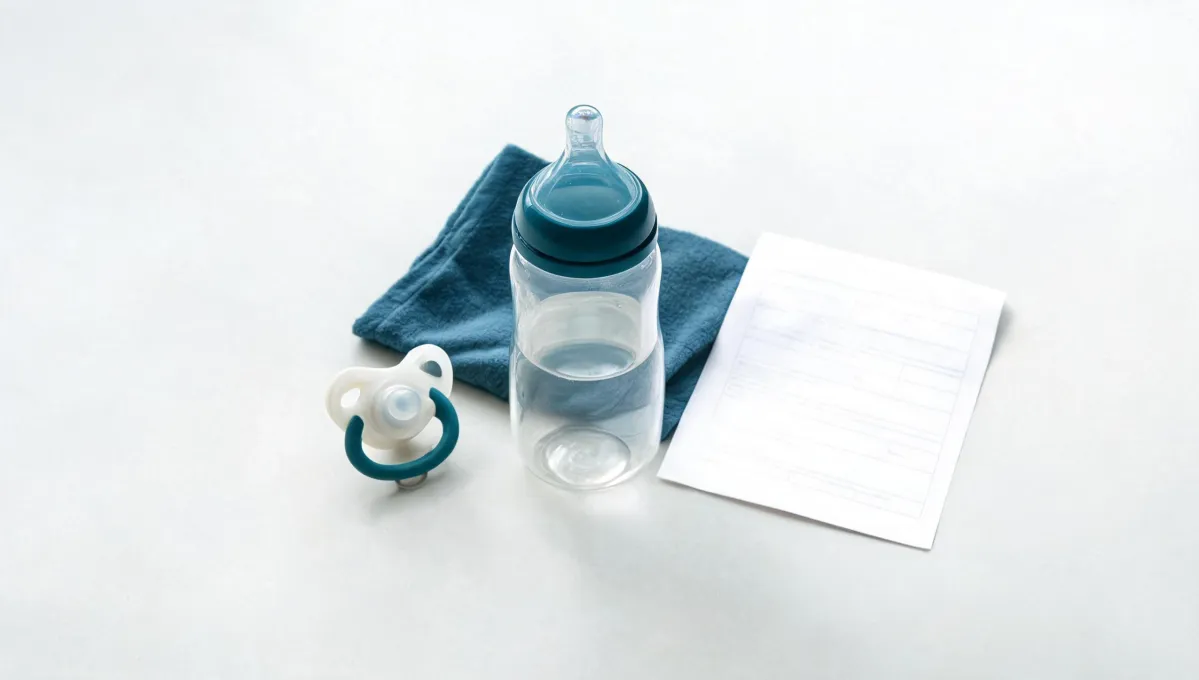
Should you buy the nanobebe Flexy silicone baby bottle? If your baby resists hard bottles, the answer is likely yes. This guide gives you a direct answer based on design, pricing, and real feeding scenarios. You’ll learn which size fits your baby, what the bottle costs, and how to clean it—so you can decide with confidence.
The Flexy Bottle Is a Dual-Size Silicone Option—Here’s the Bottom Line
The nanobebe Flexy isn’t just a silicone bottle with a different name—it’s a deliberate redesign of how a bottle can work for a breastfed baby. The 9-ounce version is listed at $18.99 on nanobebe’s official site, and it sits in the company’s Prestige line, which is reserved for their most thoughtful products. That price point is competitive with other premium bottles, but what you’re paying for is not fancy branding—it’s the flexible body that collapses gently under pressure, the wide neck that makes cleaning easier, and the soft nipple that feels more like the real thing. For a baby who refuses to drink from a rigid plastic bottle, this combination can be the difference between a stressful feeding and a calm one. In the short term, it helps you get milk into your baby; in the long term, it can preserve your milk supply because you’re less likely to skip feeds out of frustration. If you’re standing in the store comparing bottles, this is the feature set that makes Flexy stand out.
Many parents assume that 'silicone' is a single category, and that once you’ve chosen silicone over plastic, you’re done. That’s a misconception. The Flexy represents a specific take on silicone: it’s not a hard shell with a tacky coating, but a fully flexible body that bends, pushes in, and rebounds. This matters because the physical feel of the bottle in your baby’s mouth and hands influences how well they latch and how much air they swallow. It also changes your cleaning routine, since a flexible container can hold hidden residue if you don’t break it down properly. The brand’s own philosophy, summed up in the tagline 'Because Nutrients Matter,' signals that every design choice is aimed at preserving the quality of breast milk—rather than just making something that looks cute on the counter. So when you hear 'silicone bottle,' resist the urge to lump everything together. Ask whether the body is actually flexible, how wide the neck is, and what the manufacturer says about nutrient preservation.
The second thing to correct is the idea that size is just about how much milk your baby drinks. The 5-ounce Flexy is priced at $16.99, while the 9-ounce is $18.99—only a two-dollar difference. That narrow spread might make you think bigger is obviously better, but the reality is that a too-large bottle can cause problems for a small baby. When a newborn drinks from a 9-ounce bottle, the milk fills only the bottom, and the baby has to hold the bottle at an awkward angle to get the milk, which can lead to gulping air. The 5-ounce version, being shorter and narrower, fits a tiny baby’s hands better and reduces air intake. On the other hand, a 9-ounce bottle makes sense for an older baby who routinely drinks 5 to 8 ounces, because you won’t need to refill it mid-feed. The close pricing is intentional: it tells you that nanobebe is not charging a premium for capacity, so you should choose based on your baby’s feeding pattern, not on getting the most ounces per dollar.
The Design Logic: How Soft Silicone Eases the Switch From Breast to Bottle
Understanding how the Flexy works begins with its most obvious feature: the flexible body. When your baby presses against the bottle, the silicone gives rather than resists, creating a movement that resembles the give of breast tissue. This is important because breastfeeding involves a natural rhythm of compression and release; a rigid bottle interrupts that rhythm and forces your baby to adjust. The Flexy’s wide neck and soft nipple support a deep latch, which helps your baby extract milk more efficiently. The official site lists the Flexy 9oz at $18.99 under the Prestige banner, signaling that it’s part of nanobebe’s most carefully engineered line. For parents, this means the softness is not a marketing gimmick—it’s a functional response to a genuine feeding challenge. But the softness comes with a trade-off: it can be harder to read measurement marks when the bottle is squeezed, and you’ll need to handle it more gently during cleaning. That’s a small price for a bottle that could reduce your baby’s feeding resistance.
Nanobebe’s mission statement, 'Because Nutrients Matter,' is a clue to why the bottle is shaped the way it is. On its About page, the company says it creates research-driven solutions that support the bond between you and your little one. Practically, that means the Flexy is designed not just for your baby’s comfort, but for the nutritional quality of the milk itself. The soft silicone walls allow you to warm the milk more evenly by placing the bottle in warm water, and the wide mouth makes it easy to pour expressed milk without spills. Because the interior is smooth and free of crevices, fewer milk proteins cling to the surface, which means less loss of valuable antibodies when you clean it. This emphasis on nutrient preservation is what sets the Flexy apart from bottles that are merely silicone-shaped. For a mother who is pumping and measuring every drop, having a bottle that respects the milk’s fragile components can be a deciding factor.
The Flexy’s placement in nanobebe’s Prestige collection tells you something important: this is not a budget experiment. The brand highlights its award-winning design on the product page, and the Prestige category is reserved for their most trusted products. When a bottle earns industry recognition, it has usually been tested for safety, usability, and performance—not just style. For you, that award signal reduces the risk of buying something untested. It also explains the price: you’re paying for engineering, not just a name. The Flexy 9oz sells for $18.99, which is a few dollars more than a basic bottle but far less than some boutique options that cost twice as much. Given the combination of design awards, the flexible silicone body, and the accessible price, the value proposition is clear. It’s the kind of purchase where you can feel confident that the extra features have a purpose.
Choose 5oz or 9oz by Matching Your Baby’s Milk Intake and Cleaning Routine
Now it’s time to make the call: 5oz or 9oz? The answer depends on your baby’s current single-feeding amount and how fast they are growing. The 5-ounce Flexy costs $16.99, while the 9-ounce costs $18.99. If your baby is drinking 2 to 4 ounces per feed, the 5-ounce bottle is the better fit: it holds the milk without a large air pocket, and the smaller size is easier for your baby to grip. For a baby who drinks 5 to 8 ounces, the 9-ounce bottle is the logical choice, because it avoids the mid-feed refill. But there’s a third option that many parents miss: if your baby is near a growth spurt or you want a bottle that will last longer, the 9-ounce can be used from the start, even when the milk amount is smaller. The key is to observe your baby’s cues—if they seem frustrated with an empty-feeling bottle, that’s a sign to go bigger. Conversely, a too-large bottle can overwhelm a small baby, so don’t jump sizes just because the price difference is tiny.
Keeping the Flexy clean is non-negotiable, and the process is straightforward if you know what to do. The CDC’s guidelines for cleaning pump parts, published in 2017, are a useful model: rinse the parts, wash them in hot, soapy water, and sanitize them regularly. The Flexy’s silicone body is more forgiving than it looks, but it requires full disassembly each time. Remove the nipple, collar, and any vent inserts, then wash each piece with a dedicated brush. The wide neck actually simplifies this, because you can reach the bottom without a long-handled brush. After washing, place the parts on a drying rack and allow them to air-dry completely. For sterilization, you can use a microwave steam bag or boil the parts in water for a few minutes, following the manufacturer’s instructions. The reason this matters is that milk residue can harbor bacteria, and the consequences of poor cleaning were tragically demonstrated in the case that led to the CDC guidance. So even though the Flexy is designed to be easy to clean, you still need to make it a habit.
To get the best value, plan your purchase around nanobebe’s free shipping offer. Orders over $50 ship free, which means you can buy the Flexy bottle you need and add a few essentials like pacifiers or cleaning brushes without paying extra for delivery. The official site also shows that some products are HSA\/FSA eligible, so you might be able to use pre-tax dollars. If you’re starting from scratch, look at their feeding sets, which bundle bottles with other useful items at a slight discount. For example, the Breastmilk Bottle Starter Set is priced around $39.99, and during promotional periods like Black Friday, you might see 20% off silicone bottles and sets. The key is to wait until you can cross the $50 threshold naturally, rather than paying $10 for shipping on a single bottle. That way, you’re not just buying a bottle—you’re building a feeding system at a reasonable cost.
Use This Decision Rule to Know If Flexy Is Right for You
So after all that, here’s the verdict: the nanobebe Flexy is a well-designed, fairly priced bottle that can genuinely help babies who resist hard plastic. The 9-ounce version at $18.99 is a reasonable investment, especially when you consider that it’s part of the Prestige line and backed by award-winning design. It’s not a one-size-fits-all solution—some babies will still prefer a firmer nipple or a different shape—but for the common case of a breastfed baby who fusses at feeding time, it’s a smart first try. The soft body, the wide neck, and the nutrient-focused design come together in a product that understands the real-world struggles of parents. If you’ve been chasing an answer to the bottle battle, this is a concrete option with a tangible mechanism behind it.
Here’s a simple decision rule to help you finalize your choice. Choose the Flexy if your baby is showing signs of bottle rejection, such as crying or pushing the bottle away, and you believe the rigidity of your current bottle is the culprit. Also choose it if you want a bottle that can be warmed gently and squeezed to control the flow, which is useful for paced feeding. Skip it if your baby already accepts any bottle you offer, or if you strongly prefer precise measurement markings that won’t distort when you press on the bottle. For the size, use this guide: buy the 5-ounce Flexy for newborns who feed less than 5 ounces per meal and for small babies who are still mastering their latch. Buy the 9-ounce for babies who drink 5 ounces or more, or for parents who want a bottle that will still fit at 12 months. When in doubt, start with one bottle of either size and observe for a week before investing in a set.
Finally, a practical suggestion from a parenting perspective: test the Flexy before you commit to a full set. Start with a single bottle in the size you think you need—maybe the 5oz for a newborn or the 9oz for an older baby—and use it exclusively for three to five days. Watch how your baby latches, whether they swallow air, and how the bottle feels to you. If your baby drinks better and seems calmer, gradually replace your other bottles. If not, you’re only out $17 to $19, which is a small price for peace of mind. Remember that transitioning from breast to bottle is a learning process for both of you; some babies need a few tries before they accept a new nipple shape. The Flexy’s soft body also changes how you hold and tip the bottle, so give yourself a few days to adapt. In the end, the right bottle is the one that fits your baby’s cues and your routine—and the Flexy gives you a very good chance of finding that fit.
When you’re standing in the baby aisle, remember the guiding rule: choose the Flexy if your baby’s feeding battles are about the bottle, not the milk. Match the size to the amount your baby drinks today, and let the soft body do the convincing. That’s the decision rule that cuts through the marketing noise.

Jane Smith
I’m Jane Smith, a senior content writer with over 15 years of experience in the packaging and printing industry. I specialize in writing about the latest trends, technologies, and best practices in packaging design, sustainability, and printing techniques. My goal is to help businesses understand complex printing processes and design solutions that enhance both product packaging and brand visibility.